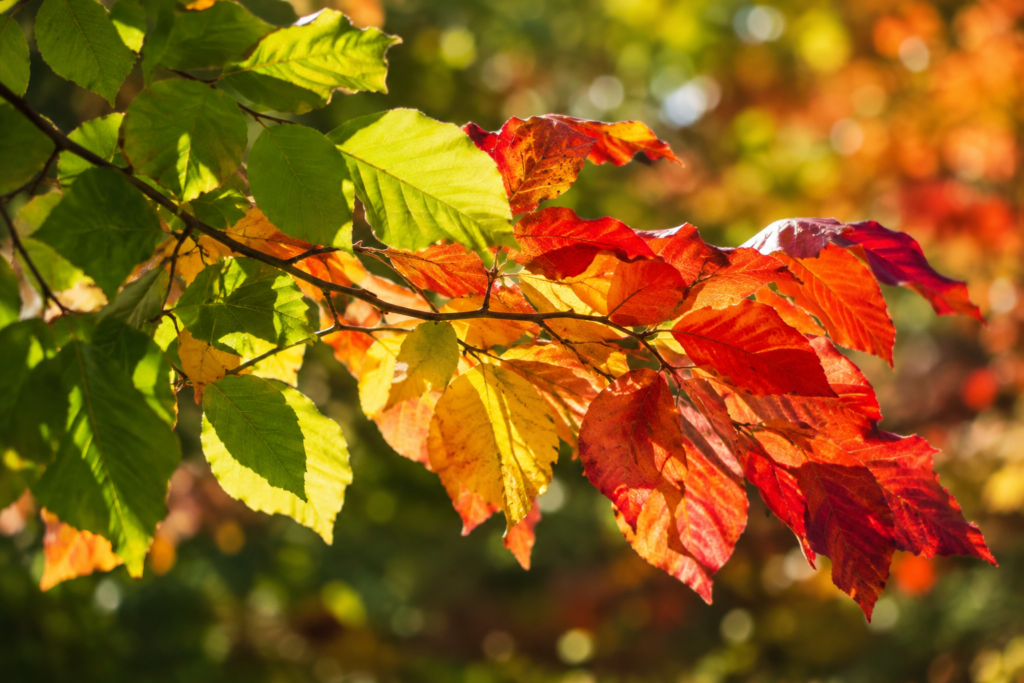
A Process Already Quietly Underway
Even though peak fall foliage is still weeks away for most of the country, the biological process responsible for autumn’s color change is already beginning in early September, triggered by the same shortening daylight hours responsible for several other seasonal shifts happening right now. Understanding what’s actually happening inside a leaf explains why this transformation follows such a predictable pattern every year, and why some falls produce more vivid color than others.
Green Was Always a Temporary Disguise
Throughout spring and summer, leaves appear green because of chlorophyll, the pigment responsible for capturing sunlight and driving photosynthesis, the process by which plants convert light into chemical energy. Chlorophyll is produced in abundance during the growing season and is present in such high concentrations that it masks other pigments that exist in the leaf all along but simply aren’t visible while chlorophyll dominates.
As daylight hours shorten heading into fall, trees respond to this photoperiod change by gradually halting chlorophyll production. Without continued production to replace it, existing chlorophyll breaks down and fades, and as the green pigment recedes, the other pigments that were present in the leaf all summer—simply hidden beneath the chlorophyll—become visible for the first time.
Where Yellow and Orange Colors Come From
The yellow and orange colors that emerge as chlorophyll fades come from carotenoids, the same category of pigment responsible for the color of carrots and many other yellow and orange fruits and vegetables. Carotenoids are present in leaves throughout the growing season, working alongside chlorophyll to assist in photosynthesis, but their yellow-orange color is completely overwhelmed by chlorophyll’s dominant green until chlorophyll production stops in fall.
Because carotenoids are already present in the leaf rather than being newly produced during the color change process, yellow and orange fall colors tend to be relatively consistent from year to year for a given tree, since the underlying carotenoid content doesn’t vary dramatically based on weather conditions in any particular autumn.
Why Red Colors Are a Different Story Entirely
Red and purple fall colors work through an entirely different mechanism than yellow and orange. Unlike carotenoids, which are present throughout the growing season, the red pigments—anthocyanins—are actually produced fresh in autumn, synthesized specifically in response to the same seasonal cues driving chlorophyll breakdown. This is a genuinely active, energy-requiring process rather than simply the unmasking of a pigment that was there all along.
Because anthocyanin production is an active process rather than a passive unmasking, it’s considerably more sensitive to the specific weather conditions present during the color-change period, which is the primary reason red fall color intensity varies noticeably from year to year in ways that yellow and orange coloring generally doesn’t.
The Weather Conditions That Produce the Most Vivid Reds
Research into anthocyanin production has identified a fairly consistent pattern of ideal conditions: a combination of warm, sunny days paired with cool—but not freezing—nights tends to produce the most vivid red coloring. Sunny days allow leaves to continue producing sugars through photosynthesis for as long as possible before shutting down entirely, while cool nights slow the transport of those sugars out of the leaf and back into the tree, causing sugar to accumulate within the leaf itself.
This sugar accumulation appears to directly stimulate anthocyanin production, meaning a fall with this specific weather pattern—bright, sunny days and crisp, cool nights, without an early hard freeze cutting the process short—tends to produce the most dramatic, saturated red foliage displays. A fall with excessive cloud cover, unusually warm nights that don’t allow sugar to accumulate, or drought stress that causes leaves to drop before color fully develops typically produces a more muted, less vivid display by comparison.
Why the Timing Follows Daylight, Not Temperature
Because the process is fundamentally triggered by shortening daylight rather than temperature, the general timing of fall color change follows a remarkably consistent calendar schedule from year to year in a given location, even as the specific weather conditions that determine color intensity vary. This is why fall foliage tends to begin and progress at broadly similar times each year regardless of whether a particular September or October happens to be warmer or cooler than average—the trigger is the sun’s changing angle and day length, a constant that doesn’t shift with any given year’s particular weather pattern.
A Predictable Process With an Unpredictable Payoff
The broad timeline of fall color change is essentially locked in by daylight patterns that repeat reliably every year, but the specific vividness and duration of any given fall’s display depends on a more variable combination of sunlight, temperature, and moisture in the weeks leading up to and during the transition. As September progresses and daylight continues shortening, this quiet, already-underway process will become increasingly visible, culminating in the seasonal display that defines the weeks ahead.