Packing Lunches When It’s Still 90 Degrees Out
Back-to-school season arrives while much of the country is still solidly in the grip of late-summer heat, which creates a real practical challenge: lunches packed in the morning often sit in a warm backpack or locker for four to six hours before they’re eaten, well within the window where food safety becomes a genuine concern. These five lunch ideas are built specifically to hold up in the heat, either because they don’t require refrigeration at all or because they’re naturally more heat-stable than typical lunchbox fare.
Why Heat and Packed Lunches Are a Real Combination to Plan Around
Perishable foods left in the “danger zone” between 40 and 140 degrees Fahrenheit for more than two hours—or just one hour when ambient temperatures exceed 90 degrees—become meaningfully more likely to harbor bacterial growth. A backpack sitting in a warm classroom, a hot car during drop-off, or a locker without climate control can easily push a lunch bag into unsafe temperature territory well before lunchtime, particularly for lunches packed at 7 a.m. and not eaten until noon or later.
Frozen Water Bottle as a Built-In Ice Pack
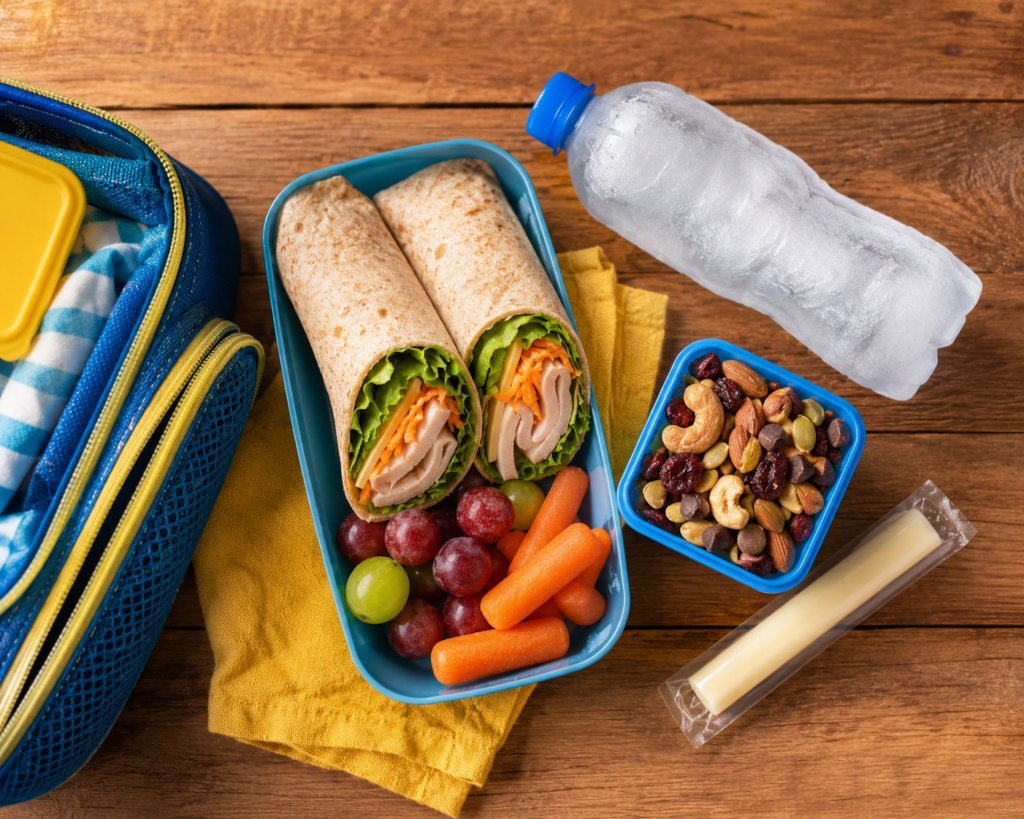
This is less a recipe and more a foundational strategy that makes everything else more reliable. Freeze a reusable water bottle overnight and pack it directly alongside the lunch items. As it thaws throughout the morning, it keeps the surrounding food meaningfully cooler than an unfrozen lunch bag would stay on its own, and by lunchtime, it’s thawed enough to drink as a cold beverage—solving two problems with one item.
Hummus and Veggie Wrap
Whole wheat tortillas spread with hummus and filled with shredded carrots, cucumber slices, and baby spinach hold up well without refrigeration for several hours, since hummus itself doesn’t spoil as quickly as dairy-based spreads. Roll tightly and slice in half for easier eating. This combination provides protein and fiber without relying on any ingredient that requires strict temperature control.
Peanut Butter and Banana Sandwich
A classic for a reason: peanut butter is shelf-stable and doesn’t require refrigeration to remain safe, making it one of the more heat-tolerant sandwich fillings available. Pair with banana slices added just before eating (or packed separately in a small container to prevent sogginess) for natural sweetness without added sugar. For nut-free environments, sunflower seed butter provides a similar shelf-stable alternative.
Trail Mix and Cheese Stick Combo
For lunches that skip a traditional sandwich entirely, a combination of a shelf-stable cheese stick (many brands are formulated to hold up reasonably well outside refrigeration for several hours, particularly processed varieties), a small bag of trail mix with nuts and dried fruit, and whole grain crackers provides a balanced, mostly heat-stable meal. Pairing the cheese stick directly against a frozen water bottle in the lunch bag provides just enough additional cooling to keep it in safer territory through a longer school day.
Bean and Corn Salad With a Lime Dressing
This one benefits from an acidic dressing, which provides some natural inhibition of bacterial growth alongside the cooling from a frozen water bottle. Combine canned black beans (rinsed and drained), corn kernels, diced bell pepper, and a squeeze of lime juice with a little olive oil and salt. This salad holds up well for several hours and provides a more substantial, vegetable-forward lunch option than many typical packed lunches.
The Real Difference-Maker: Insulated Bags
Beyond any individual recipe, an insulated lunch bag—rather than a simple paper bag or an uninsulated cloth bag—makes a measurable difference in how well any lunch holds its safe temperature through a warm morning and midday. Combined with a frozen water bottle or a dedicated ice pack, an insulated bag can keep contents in a meaningfully safer temperature range for several hours longer than an uninsulated alternative, making it one of the most effective and least glamorous back-to-school investments available.
Getting Through the Overlap Season
The stretch when school resumes but summer heat hasn’t yet broken requires a bit more intentionality around lunch packing than either full summer or true fall does on their own. Leaning on naturally heat-stable ingredients, using a frozen water bottle as both ice pack and beverage, and investing in genuine insulation are the practical steps that keep packed lunches both appealing and genuinely safe through the hottest weeks of the new school year.