This Is What You’ve Been Waiting For
Late July is when the farmers market stops being a pleasant errand and becomes an actual event. The tables that held tentative early tomatoes and modest first peppers in June are now overflowing: heirloom tomatoes in every color and size, sweet corn at full ripeness, bell peppers and hot peppers in abundance, eggplant ranging from Japanese to globe, peaches and nectarines and plums at their peak, summer squash in quantities that test the creativity of everyone who grows it. The season that arrived gradually through spring and early summer has now delivered everything it promised.
These recipes treat peak summer produce as the main event — not as a garnish or a side dish but as the reason the meal exists. They are simple by design, because produce this good doesn’t need much done to it.
Heirloom Tomato Salad with Anchovy Dressing
An heirloom tomato at peak ripeness in late July needs almost nothing. What it needs is salt, time, and something savory enough to meet the tomato’s intensity rather than compete with it. Anchovy provides exactly that — not as a fishy flavor but as a deep, briny savory note that makes tomatoes taste more like themselves.
Slice two pounds of mixed heirloom tomatoes into irregular pieces — halves, quarters, thick slices, whatever the shape of each tomato suggests. Arrange on a platter and season generously with flaky salt. Let them sit for ten minutes, which allows the salt to draw out some of the tomato’s liquid.
For the dressing: mash four anchovy fillets with a garlic clove and a pinch of salt using the flat of a knife until they form a paste. Whisk in two tablespoons of red wine vinegar, then a quarter cup of good olive oil. Drizzle over the tomatoes. Scatter fresh basil — torn, not sliced — over the top. Finish with black pepper and a final drizzle of olive oil.
Why now: A January tomato dressed with this will taste like disappointment. A late July heirloom dressed with this will taste like the reason to have a garden or a farmers market habit. The tomato is the entire point.
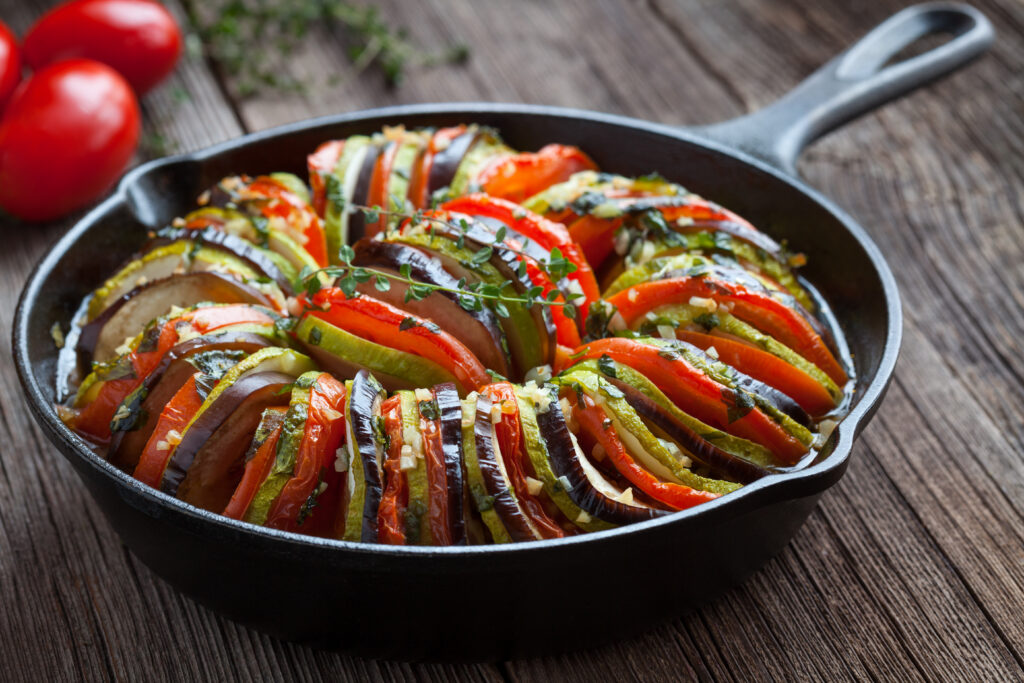
Ratatouille
Ratatouille is the recipe that exists specifically for the moment when you have tomatoes, zucchini, eggplant, and peppers all at the same time — which happens exactly now. The classic Provençal dish requires no apology for its simplicity: it is essentially summer vegetables cooked together in olive oil until they become something better than their parts.
Cut one large eggplant, two medium zucchini, two bell peppers (mixed colors), and one large onion into roughly one-inch pieces. Warm four tablespoons of olive oil in a wide, heavy pot over medium heat. Add the onion and cook until softened, about eight minutes. Add the peppers and cook five more minutes. Add the eggplant with a generous pinch of salt and cook, stirring occasionally, until beginning to soften, about eight minutes. Add the zucchini and two pounds of chopped ripe tomatoes (or one 28-ounce can of whole tomatoes, crushed by hand). Add three minced garlic cloves, fresh thyme, fresh basil, salt, and pepper.
Simmer uncovered over medium-low heat for 30 to 40 minutes until the vegetables are completely tender and the mixture has thickened. Taste and adjust salt. Serve warm, at room temperature, or cold — ratatouille is one of the few dishes that is genuinely excellent at any temperature.
Why now: Ratatouille made with peak summer vegetables is completely different from the same recipe made with off-season produce. The tomatoes break down into a sauce that carries the flavor of real summer. Make a large batch — it improves over three days in the refrigerator and is one of the most versatile things in the summer kitchen.
Grilled Peaches with Prosciutto and Arugula
The combination of sweet ripe peach, salty prosciutto, and peppery arugula is one of summer’s great flavor triangles, and grilling the peach adds a caramelized depth that raw peach doesn’t have. This works as a first course, a light lunch, or a side dish alongside grilled meat.
Halve four ripe but firm peaches and remove the pits. Brush the cut sides lightly with olive oil. Grill cut-side down over medium-high heat for three to four minutes until grill marks appear and the peach has softened slightly. Remove and let cool five minutes.
Arrange a handful of arugula on each plate. Place two peach halves on the arugula. Drape one or two slices of prosciutto over each peach half — it will warm slightly from the peach and become silky. Drizzle with good olive oil and a few drops of aged balsamic. Finish with shaved Parmesan or crumbled fresh goat cheese if desired, and a crack of black pepper.
Why now: Late July peaches are at the peak of their sweetness and perfume. The same dish with an underripe or out-of-season peach is technically identical and categorically inferior.
Corn and Poblano Quesadillas
Peak summer corn — sweet, starchy, just harvested — is worth eating raw. It is also worth cooking minimally in a way that concentrates its flavor rather than diluting it. Charred corn in a quesadilla with roasted poblano and melted cheese is one of the better things a summer ear of corn can become.
Char two ears of corn directly over a gas burner or on a hot grill, turning until spotted with black. Cut the kernels from the cob. Roast two poblano peppers directly over the flame until completely charred, place in a covered bowl for ten minutes, then peel, seed, and dice.
Combine the corn, poblano, and a cup of shredded Monterey Jack or pepper jack in a bowl with salt and a squeeze of lime. Heat a large skillet over medium heat. Place a flour tortilla in the pan, spread half the filling over one half of the tortilla, fold over, and cook two to three minutes per side until golden and the cheese has melted. Cut into wedges and serve with sour cream and salsa.
Why now: Peak summer corn has a sweetness and moisture that makes the filling taste alive rather than starchy. Frozen corn produces a different dish — worth making, but not the same.
Peach and Raspberry Crumble
The peach crumble is a summer dessert that requires almost no technique and rewards almost any level of effort with something genuinely good. Adding raspberries — which peak at the same time as peaches in late July — introduces a tartness that balances the peach’s sweetness and gives the filling a complexity that single-fruit crumbles rarely have.
Peel and slice five or six ripe peaches — enough to fill a 9×13 baking dish generously. Toss with one cup of raspberries, three tablespoons of sugar, a tablespoon of cornstarch, and the zest and juice of half a lemon. Pour into the baking dish.
For the topping: combine one and a half cups of rolled oats, three-quarters cup of all-purpose flour, three-quarters cup of brown sugar, half a teaspoon of cinnamon, a pinch of salt, and eight tablespoons of cold butter cut into small pieces. Work the butter in with your fingers until the mixture resembles coarse crumbs with some larger pieces — don’t overwork it. Spread evenly over the fruit.
Bake at 350°F for 40 to 45 minutes until the topping is golden and the fruit is bubbling at the edges. Serve warm with vanilla ice cream.
Why now: Late July peaches at full ripeness produce a filling that is intensely sweet and aromatic without any added flavor beyond lemon and a modest amount of sugar. Out-of-season peaches require significantly more sugar and still don’t taste the same. This is the version worth making.
The Peak Is Brief
The abundance of late July doesn’t last. Within six weeks, the summer produce season will be winding down — the tomatoes will give way to the first cool-weather crops, the peaches will have passed their peak, and the sweet corn season will be over. Cooking with what’s at peak right now, in the specific week when it’s best, is the whole argument for seasonal eating expressed in a single summer meal.
Eat the tomatoes. The season won’t last.