The Pool of Water That Isn’t There
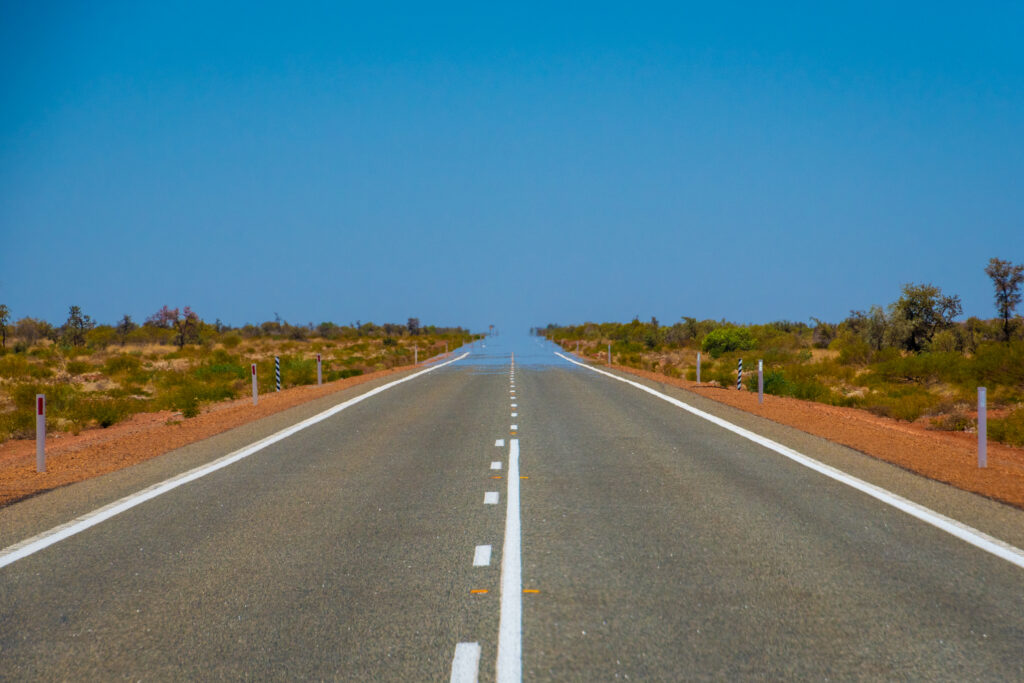
On a hot summer day, the highway ahead appears to hold a pool of shimmering water — a reflection of the sky so convincing that it seems to promise relief from the heat. As you approach, it retreats, always just ahead, never reachable. Pull over and the pavement is bone dry.
This is an inferior mirage — the most common atmospheric optical phenomenon in everyday life and one that most people have seen hundreds of times without knowing what causes it. The water isn’t an illusion in the sense of a trick your mind is playing. It is a real optical effect produced by the physics of light traveling through air of different temperatures. Understanding it opens into a family of related phenomena — superior mirages over water, the Fata Morgana over cold seas — that collectively represent some of the most visually extraordinary things the atmosphere produces.
How Light Bends in Air
The key to all mirage science is the relationship between air temperature and the speed of light. Light travels at different speeds through media of different densities — faster through less dense material, slower through denser material. When light crosses a boundary between materials of different densities, it bends — a process called refraction — toward the denser medium.
Air density varies with temperature: warm air is less dense than cool air. When light travels through air with a temperature gradient — a region where temperature changes with altitude — it is continuously refracted, bending gradually toward the cooler, denser air. This continuous bending can produce dramatic changes in where images appear to come from, even without any sharp boundary for light to cross.
The strength of the refraction depends on the steepness of the temperature gradient. A gentle gradient produces slight bending that slightly displaces images. An extreme gradient — like the one above sun-heated pavement on a summer afternoon — produces enough bending to redirect light from the sky downward to the observer’s eye in a path that appears to come from the ground ahead, producing the characteristic shimmering pool.
The Inferior Mirage: Highway Shimmer
The inferior mirage — “inferior” because the mirage image appears below the actual object — forms when the surface is dramatically hotter than the air above it. This condition is met most intensely above dark pavement and sandy desert surfaces on cloudless summer days.
Asphalt absorbs nearly all incident solar radiation and converts it to heat, reaching surface temperatures of 130°F to 150°F on hot summer afternoons as covered in the outdoor heat science piece. The air immediately above this superheated surface — within the lowest few inches to feet — is dramatically warmer than air even a short distance above it. This creates an extreme temperature gradient: very hot at the surface, much cooler a few feet up.
Light from the sky, traveling downward at an angle toward the road, encounters this gradient. As it enters the extremely warm surface air, it is refracted — bent upward, away from the dense cool air and toward the less dense warm air near the surface. With sufficient temperature gradient and viewing angle, the bending becomes total internal reflection — the light ray is curved back upward before reaching the actual surface and redirected toward the observer’s eye.
What the observer sees is light from the sky arriving from the direction of the road ahead, which the visual system correctly interprets as a reflection from a horizontal surface — which in any normal context would be water. The shimmering quality comes from turbulent mixing of air layers at different temperatures, which causes the temperature gradient to fluctuate rapidly, continuously varying the degree of refraction and producing the dancing, unstable appearance of the reflected image.
The mirage recedes as you approach because the geometry of refraction is angle-dependent. The path length through the hot surface air that is required for sufficient bending exists at shallow angles — looking far ahead along the road. As you approach the location where the mirage appeared, your viewing angle increases and the required path through the surface layer is no longer present. The mirage shifts to a new location farther down the road, always maintaining the necessary shallow angle.
The Superior Mirage: Seeing Beyond the Horizon
The inferior mirage forms above hot surfaces. The superior mirage — in which images appear above their actual position — forms above cold surfaces, particularly cold water, and produces some of the most striking visual effects in atmospheric optics.
When cold water chills the air immediately above it while warmer air sits higher up, the temperature gradient is inverted compared to the inferior mirage situation: cold near the surface, warm above. Light traveling through this inverted gradient is refracted downward — bent toward the cold, dense surface air. This downward bending allows light from objects beyond the geometric horizon to travel over the curvature of the Earth and reach an observer, effectively extending the visible range beyond what geometry alone would permit.
Superior mirages over cold water can produce images of ships, coastlines, or land masses that are normally below the horizon — elevated above their actual positions and sometimes inverted, displaced, or stretched into bizarre shapes. Sailors and coastal observers have reported seeing features of distant coastlines in remarkable detail, or ships appearing to float far above the water surface, as a result of superior mirages.
The Great Lakes in early summer — when water temperatures are still cold from winter while air temperatures above them have warmed significantly — are classic locations for superior mirages. Observers on the south shore of Lake Superior have reported seeing the Canadian north shore, which is 30 miles away and geometrically below the horizon, elevated clearly above it by superior mirage conditions. The same phenomenon occurs over cold ocean currents, particularly the cold Labrador Current along the northeastern Atlantic coast.
The Fata Morgana: Superior Mirages in Their Most Extraordinary Form
The Fata Morgana is a specific type of superior mirage that occurs when the temperature inversion above cold water is particularly sharp and layered, producing multiple simultaneous refractions that stack, invert, and distort distant images into fantastical shapes that bear no recognizable resemblance to their sources.
Named for the Arthurian sorceress Morgan le Fay, who in Italian legend was said to create magical castles in the air above the Strait of Messina, the Fata Morgana produces images of distant coastlines or ships that are transformed into towering structures, inverted cityscapes, or floating landmasses. The layered temperature inversions over cold water create a complex ducting structure that bends light through multiple refractions, each producing its own image at a slightly different position, and the visual system assembles the resulting stack of images into something that looks like an architectural structure rather than a distant shoreline.
Historical accounts of the Flying Dutchman — the legendary ghost ship seen hovering above the water — almost certainly describe Fata Morgana events over cold Atlantic and Southern Ocean waters. Early polar explorers described spectacular mirages of mountain ranges and distant land that turned out to be distorted images of sea ice or coastal features far beyond the horizon. The phenomenon is real and consistent with the physics of layered atmospheric refraction, even when the specific images it produces are spectacular enough to inspire supernatural explanation.
Desert and Polar Mirages
The same physics that produces highway shimmer and sea mirages operates wherever steep temperature gradients exist near the surface, which means desert environments and polar regions are the locations of the world’s most spectacular mirage activity.
Desert mirages are the inferior variety at their most extreme — the combination of dark sand, intense solar radiation, and dry air that prevents atmospheric moisture from moderating surface temperatures produces temperature gradients more extreme than any other landscape. Travelers in the Sahara and Arabian deserts have reported seeing what appeared to be entire lakes and oases that were pure mirages — images of the sky bent by the superheated desert surface into convincing reflections of water that were indistinguishable from the real thing at a distance.
Polar mirages, conversely, are superior mirages of extraordinary intensity and duration. The extreme temperature inversions that form over polar sea ice — air temperatures rising sharply with altitude above the frigid surface — produce ducting conditions that can make distant land masses appear to float above the horizon for hours. Antarctic explorers documented mirage conditions that made precise geographic navigation difficult and created confusion about the positions and heights of visible features.
The Common Denominator
Every mirage, from the shimmering highway ahead of you to the spectral ships above cold Arctic water, is produced by the same physical principle: light bends when it passes through air of different temperatures, and extreme temperature gradients near Earth’s surface produce extreme bending. The inferior mirage bends light up from hot surfaces; the superior mirage bends it down over cold ones.
The summer highway is the most accessible version of this physics — available to anyone driving on a hot afternoon, requiring no special location or conditions. The next time you see that shimmer ahead, you’re watching the same atmospheric optics that produced the Fata Morgana over the Strait of Messina, the phantom lakes of the Sahara, and the ghost ships of Arctic legend. The scale is different. The physics is identical.