The Season That Fights Bedtime on Every Front
Summer attacks children’s sleep from multiple directions simultaneously. The days are long — sunrise before 6 a.m. and sunset after 8:30 p.m. at the summer solstice in most of the country. Bedrooms that were dark and cool in winter are now bright and warm well into the evening. School-year routines that anchored sleep and wake times have dissolved. And children, whose circadian systems are more sensitive to light than adults’, respond to all of these changes in ways that can shift their sleep timing by hours if nothing intervenes.
The resulting sleep deprivation — quieter and more gradual than the acute exhaustion of a missed night, but cumulative and real — affects children’s mood, behavior, cognitive function, and physical health in ways that often get attributed to summer excitement or general energy rather than to what’s actually happening: insufficient sleep driven by specific, identifiable weather and light factors.
Understanding what’s driving summer sleep disruption in children is the first step toward addressing it — and most of the interventions that actually work are simpler and less disruptive than parents fear.
Children’s Circadian Systems Are More Light-Sensitive Than Adults’
The fundamental reason summer’s long days hit children’s sleep harder than adults’ is neurological. Children’s pupils are larger relative to adult pupils, allowing more light to reach the retina. Their lens is clearer and transmits more light to the photoreceptive cells, particularly the intrinsically photosensitive retinal ganglion cells that drive the circadian system’s light response. The result is that a given level of evening light suppresses melatonin more strongly in children than in adults exposed to the same environment.
This heightened light sensitivity means that summer’s extended evening daylight — the 7:30 p.m. light that streams through bedroom windows in June and July — delays melatonin onset in children more powerfully than it does in parents sleeping in the same house. A child who struggled to fall asleep before 9:30 p.m. in early June may find their natural sleep onset has drifted to 10:30 or 11 p.m. by July, not because they aren’t tired but because their circadian system is responding to light in ways that biochemically prevent sleep onset.
The effect compounds with age in a specific way. Adolescents experience a biological circadian phase delay at puberty — their clocks naturally shift later, making early sleep onset genuinely difficult regardless of light exposure. Summer’s light environment pushes this delay further still, producing the teenager who genuinely cannot fall asleep before midnight regardless of parental instruction and cannot wake before 9 or 10 a.m. without significant sleep deprivation.
Heat’s Specific Effects on Children’s Sleep Architecture
The thermoregulatory mechanisms that drive adult sleep disruption in warm weather, covered in the 5/7 warm-night sleep piece, operate in children through similar pathways with some important differences.
Children have a higher surface-area-to-volume ratio than adults — their bodies are smaller relative to their skin surface, which means they both gain and lose heat faster. In warm bedroom environments, children’s core body temperature can remain elevated into the evening hours more persistently than adults’ in the same room, delaying the temperature drop that is a prerequisite for sleep onset.
Children are also less able to communicate thermal discomfort clearly, particularly younger children who may not have the vocabulary to say they’re too warm or the metacognitive awareness to connect their inability to sleep with the temperature of their room. A toddler cycling through behavioral distress at bedtime in July may be expressing thermal discomfort as much as routine resistance — the two look similar from the outside and require different responses.
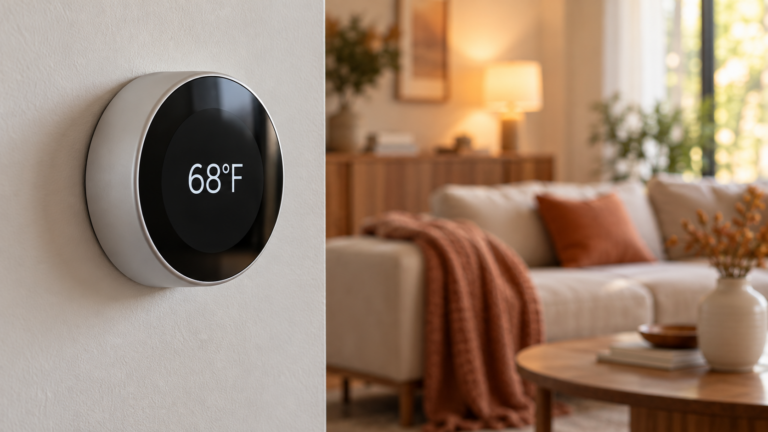
The optimal bedroom temperature for children’s sleep is in the same range as for adults — approximately 65°F to 68°F — but children’s greater surface-area-to-volume ratio means they may actually tolerate slightly cooler temperatures better than adults at the same age. A bedroom that feels comfortable to a parent may be too warm for the child sleeping in it, particularly if the child sleeps in pajamas while the parent sleeps in lighter clothing.
The Schedule Disruption Problem
Beyond light and heat, summer disrupts children’s sleep through the dissolution of the school-year schedule that anchored their circadian timing. Fixed school start times — whatever their specific hour — provide a powerful zeitgeber, a time cue that synchronizes the circadian clock by enforcing a consistent wake time. When school ends, the external anchor on morning wake time disappears, and without it, children’s sleep timing drifts later in a process called social jet lag.
Social jet lag — the misalignment between biological clock timing and social schedule — is well-documented in adolescents and increasingly recognized in younger children. When the morning alarm disappears and children are allowed to sleep until their natural wake time, their circadian clock receives the signal that it was right to fall asleep late and that it can do so again the next night. Over days and weeks, sleep onset drifts progressively later, wake time drifts later to compensate, and the child’s entire sleep schedule migrates into territory that is incompatible with the school-year schedule that will resume in August or September.
The problem this creates is not just a late-summer struggle to reset before school — it is the cumulative sleep deprivation that accumulates through the summer if the late sleep timing isn’t compensated by late wake times. Children who fall asleep at 11 p.m. but must be up for a camp pickup at 7 a.m. are accumulating sleep debt that manifests as behavioral dysregulation, irritability, reduced impulse control, and cognitive difficulties that look remarkably similar to ADHD symptoms to observers who aren’t aware of the sleep context.
What Actually Helps
The interventions that most reliably protect children’s summer sleep address the specific mechanisms — light, heat, and schedule — rather than simply instructing children to sleep.
Blackout curtains are the single most impactful environmental intervention. The extended evening daylight that delays melatonin onset in children can be largely addressed by blocking it from the bedroom. Even inexpensive blackout curtains or blackout blinds installed over existing window treatments create a sleep environment that is dark enough to support melatonin production at an appropriate evening hour. Installing blackout curtains before summer disruption peaks — ideally before the end of school — prevents the circadian drift from establishing before intervention is attempted.
For young children who are afraid of complete darkness, a dim red nightlight (red light has minimal circadian effect) maintains some light while allowing melatonin production to proceed.
Maintain a consistent anchor point — either wake time or bedtime, but ideally both. Completely unrestricted sleep timing through summer is the fastest path to significant circadian drift. Maintaining wake time within an hour of the school-year schedule, even on days with no obligations, provides a consistent morning light exposure that prevents the clock from drifting as dramatically as it would without any anchor. If a consistent wake time is impractical, maintaining a consistent bedtime — even if it is somewhat later than the school-year bedtime — is better than allowing both to drift.
Cool the bedroom before bedtime. As covered in the adult sleep physiology piece, the bedroom should be at its coolest during the hours before and during sleep. In summer, this means running air conditioning in the bedroom before sleep onset rather than waiting for the room to cool after the child is already struggling to fall asleep. A fan directed away from the child (to circulate air without direct airflow on the sleeper, which can cause discomfort) helps maintain temperature through the night. Switching to lighter-weight bedding — replacing flannel with cotton percale, removing extra blankets — reduces the thermal barrier between the child’s body and the room air.
Limit evening screen use. Electronic screens emit blue-spectrum light that suppresses melatonin with particular effectiveness, adding to the circadian delay from summer’s natural extended daylight. The AAP’s recommendation to avoid screens in the hour before bedtime has a specific physiological basis in summer — the combination of outdoor light exposure through the evening and screen light in the hour before bed can delay melatonin onset by two hours or more in light-sensitive children. This doesn’t require eliminating evening screen time entirely, but dimming screens, enabling night mode (which shifts screen light toward warmer wavelengths), and establishing a screen-off period in the final 30 to 60 minutes before the target sleep time meaningfully reduces the circadian delay.
Front-load outdoor light exposure. Morning and early afternoon outdoor light exposure — particularly in the hour after waking — advances the circadian clock, counteracting the delaying effect of evening light. Making morning outdoor time a summer routine, whether through camps, outdoor play, walks, or simply breakfast on the porch, provides the morning light signal that anchors the clock earlier and makes it easier to fall asleep at an appropriate hour in the evening.
The September Reset
For families whose children have drifted significantly through the summer — bedtimes two or three hours later than the school-year baseline, wake times correspondingly late — the return to school represents a forced phase advance that can produce significant sleep deprivation for the first weeks of the school year.
Beginning to shift sleep timing back toward school-year schedules two to three weeks before school resumes — moving bedtime and wake time earlier by 15 to 20 minutes every two to three days — allows a gradual circadian advance rather than an abrupt one. This is the same gradual adjustment approach recommended for managing jet lag and is similarly effective for summer circadian drift.
The light interventions that prevented drift work equally well in reverse to facilitate recovery: morning outdoor light exposure advances the clock, evening blackout curtains and screen reduction prevent further delay.
Sleep Is Not Negotiable in Summer
The cultural framing of summer as a time for relaxed rules, later bedtimes, and the suspension of school-year structures is understandable and has genuine value — summer is a different season with different rhythms, and children benefit from the flexibility and freedom it offers. The risk is in treating sleep timing as interchangeable with other summer flexibilities, when it is instead a physiological need that weather and light are actively working against from June through August.
The blackout curtains, the cooler bedroom, the morning outdoor time — none of these require significant effort or sacrifice of summer’s pleasures. They are small environmental adjustments that compensate for what the season’s light and heat are doing to children’s biology, and that keep the sleep foundation intact through months that are working hard to undermine it.