Summer Travel Season Has Arrived. Your Pet Needs a Plan.
Summer is the peak season for travel with pets — family road trips, beach vacations, visits to relatives, camping trips, and the general expansion of outdoor life that warmer months bring. It is also the season when the specific hazards of traveling with animals are most acute: heat in vehicles, airline cargo holds that can reach dangerous temperatures, unfamiliar environments that stress animals, and the disruption of routines that keep pets stable and comfortable.
Most pet travel problems are foreseeable and preventable. The ones that aren’t — the anxious dog that escapes in an unfamiliar location, the cat that stops eating for three days after arrival somewhere new — are manageable with preparation. Getting the planning right before the trip begins is vastly easier than managing the consequences of inadequate preparation mid-journey.
Car Travel: Heat Is the Primary Hazard
Road trips with pets in summer involve the same vehicle heat risk covered in the spring and summer pet pieces — a parked car in sun can reach 120°F or higher within 20 minutes on an 85°F day — but the road trip context introduces specific complications that day-trip outings don’t.
Never leave a pet in a parked car during summer stops. This requires planning rest stops around locations where you can be outside with your pet rather than leaving them in the vehicle: rest areas with dog-friendly areas, drive-throughs rather than sit-down restaurants, parks rather than shops. Build this constraint into your route planning rather than improvising at each stop.
Manage vehicle temperature actively during driving. A running car with air conditioning maintains safe temperatures for pets, but a vehicle that sits in sun even briefly — at a gas station while you pay, in a parking lot while you run a quick errand — can heat dangerously fast. If you must leave the car briefly with a pet inside, leave it running with the air conditioning on and the doors locked, or have a second person stay with the pet.
Restrain pets during travel. An unrestrained pet in a moving vehicle is a hazard both to the pet and to the human occupants. In a sudden stop or accident, a 60-pound unrestrained dog becomes a 60-pound projectile. Pet-specific seatbelt harnesses, secured travel crates, and vehicle barriers are all appropriate solutions depending on pet size and vehicle type. The most secure option for dogs is a crash-tested travel crate secured to the vehicle — some crate brands have undergone specific crash testing, which is worth seeking out for pets that will be regularly road-tripped.
Keep pets cooler than the thermostat suggests. Dogs in vehicles on sunny days experience the radiant heat from glass and surfaces that the ambient temperature doesn’t capture — the same outdoor heat physics covered in the 5/24 piece apply inside a vehicle. A dog in the back seat in direct sun may be significantly warmer than the air temperature suggests. Use sun shades on rear windows and position dogs away from direct sun exposure where possible.
Plan water stops into the schedule. Dogs need regular water breaks — every two hours of driving at minimum, and more frequently in hot weather. Carry a portable water bowl and a dedicated water supply rather than relying on finding water at stops. Collapsible silicone bowls pack flat in a door pocket and make water breaks effortless.
Car Sickness and Travel Anxiety
Motion sickness affects dogs more commonly than owners realize, and the stress of car travel can trigger anxiety in animals that are otherwise calm. Both issues are manageable but benefit from advance planning.
Signs of car sickness include excessive drooling, yawning, whining, inactivity, and vomiting. Some dogs grow out of motion sickness as they travel more frequently — the inner ear and visual systems that contribute to motion sickness adapt with experience. For dogs with persistent car sickness, veterinarians can prescribe anti-nausea medications (including maropitant, which is highly effective for canine motion sickness) for use on travel days.
Travel anxiety — panting, drooling, trembling, and trying to escape the vehicle — is a different problem with different solutions. Gradual desensitization to car travel, starting with stationary sessions in the car with treats and progressing to short drives before a long trip, reduces travel anxiety significantly in dogs with time to prepare. For dogs whose anxiety is severe enough to compromise their safety or welfare during travel, veterinarian-prescribed anti-anxiety medications or sedatives may be appropriate — discuss this well before the travel date to allow time for a trial dose at home, since some medications have variable effects and it’s better to discover that before the highway than during it.
Air Travel: The Safety Picture Is More Complex Than People Assume
Air travel with pets is more regulated, more complicated, and in some circumstances more dangerous than most pet owners realize. The options are cabin travel (for small pets that fit in an under-seat carrier) and cargo travel (for larger animals that must travel in the aircraft’s cargo hold), and the risk profiles are very different.
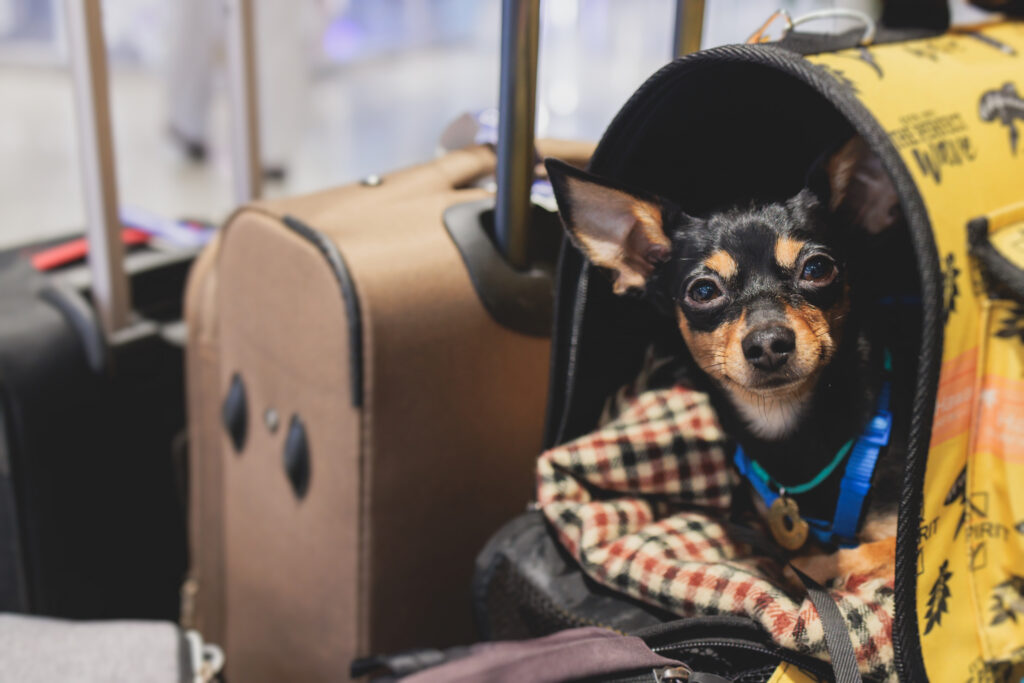
Cabin travel — pets in carriers stored under the seat in front of you — is the safest option by a significant margin. The cabin is temperature-controlled, pressurized at the same level as the passenger cabin, and the pet is visible and accessible throughout the flight. Size restrictions are strict: the carrier must fit under the seat (typically 18 x 11 x 11 inches maximum, though this varies by airline), and most airlines limit the pet’s combined weight with carrier to 20 pounds or less.
Cargo travel for pets — either checked baggage or manifest cargo — carries significantly higher risk. The cargo hold is pressurized and generally temperature-controlled on modern aircraft, but temperature and pressure management is less precise than the passenger cabin, and the pet is completely inaccessible during the flight. Brachycephalic breeds (flat-faced dogs and cats including Bulldogs, Pugs, Persian cats, and others) are prohibited from cargo travel on many airlines because their respiratory systems are more vulnerable to the stress and potential temperature and pressure variations of cargo travel. Multiple airline incidents involving pet deaths in cargo have occurred, though cargo pet travel is far more common than incidents suggest.
If cargo travel is unavoidable, summer introduces specific timing considerations. Many airlines embargo cargo pet travel during summer months when ground temperatures make the tarmac environment between aircraft too hot to safely hold animals. Check your specific airline’s summer embargo dates well in advance — some airlines suspend cargo pet acceptance from May through September, which can significantly affect travel planning.
Documentation requirements for air travel with pets include current health certificates issued by a licensed veterinarian (typically within 10 days of travel), current rabies vaccination documentation, and sometimes additional documentation for international travel. Requirements vary by airline and destination — verify specific requirements with your airline and destination country well before travel, as documentation errors can result in denial of boarding.
Managing the Unfamiliar Destination
Arriving at an unfamiliar location is stressful for many pets regardless of how the journey went. Dogs may be hypervigilant, reluctant to eat, or anxious in ways that aren’t typical at home. Cats may hide for extended periods and refuse food and water while they acclimate.
Bringing familiar items — a dog’s bed, a cat’s favorite blanket, toys with familiar scents — significantly reduces the stress of unfamiliar environments by providing olfactory anchors to the home environment. The stress-reducing effect of familiar scents on pets is well-documented and practically significant: a dog that has its own bed in an unfamiliar vacation rental settles more quickly than one sleeping on unfamiliar surfaces.
Maintain feeding and exercise routines as closely as possible during travel. The predictability of routine is itself calming for animals whose sense of security is partly built on the regularity of daily events. A dog that gets its morning walk at the same time in the vacation destination as at home has one fewer disruption to process.
Microchip registration and ID tags are especially important during travel. Dogs that escape in unfamiliar environments — spooked by fireworks, a car backfire, or an unfamiliar animal — have a much lower return rate than dogs that escape near their home. Verify that your pet’s microchip registration is current and reflects your current contact information before any trip, and ensure ID tags are legible and current.
Pets in Extreme Summer Destinations
Some summer travel destinations introduce specific hazards that require additional preparation.
Beach destinations involve sand heat (covered in the outdoor heat physics piece), saltwater ingestion, and the specific water hazards covered in the dog water safety piece — rip currents, wave knockdown, exhaustion from surf swimming. Rinse dogs after ocean swims to remove salt from coats and prevent skin irritation from dried salt. Provide fresh water consistently to reduce the temptation to drink seawater, which can cause vomiting and diarrhea.
Mountain destinations at high altitude introduce reduced oxygen and lower air pressure that can cause altitude sickness in dogs just as in humans — symptoms include lethargy, loss of appetite, and labored breathing. Most dogs acclimatize quickly to moderate altitude increases (below 8,000 feet) without difficulty. Dogs with cardiac or respiratory conditions may be more vulnerable and warrant veterinary consultation before high-altitude trips.
Camping destinations introduce wildlife encounter risks covered in the spring wildlife piece, but in potentially more concentrated form. National parks have specific leash requirements for pets that exist precisely because wildlife encounters with off-leash pets cause harm to both the pet and the wildlife. Research the specific regulations of any park or camping area before arrival.
A Little Planning Goes a Long Way
The pet travel problems that ruin vacations — the dog that overheated at a rest stop, the cat that went without water for 14 hours, the travel documentation that wasn’t current — are almost universally the result of inadequate advance planning rather than unforeseeable events. A few hours of preparation before a summer trip with a pet — checking health certificate requirements, securing a crash-tested crate, mapping pet-friendly rest stops, packing a dedicated pet travel kit — converts a potential stress cascade into the straightforward experience that summer travel with a well-prepared pet actually is.
Your pet doesn’t know where it’s going. It knows whether the environment around it feels safe and familiar, whether it has food and water, and whether you seem calm and in control. The preparation that achieves those conditions is what makes summer travel work for both of you.