Fourteen Years Ago Today
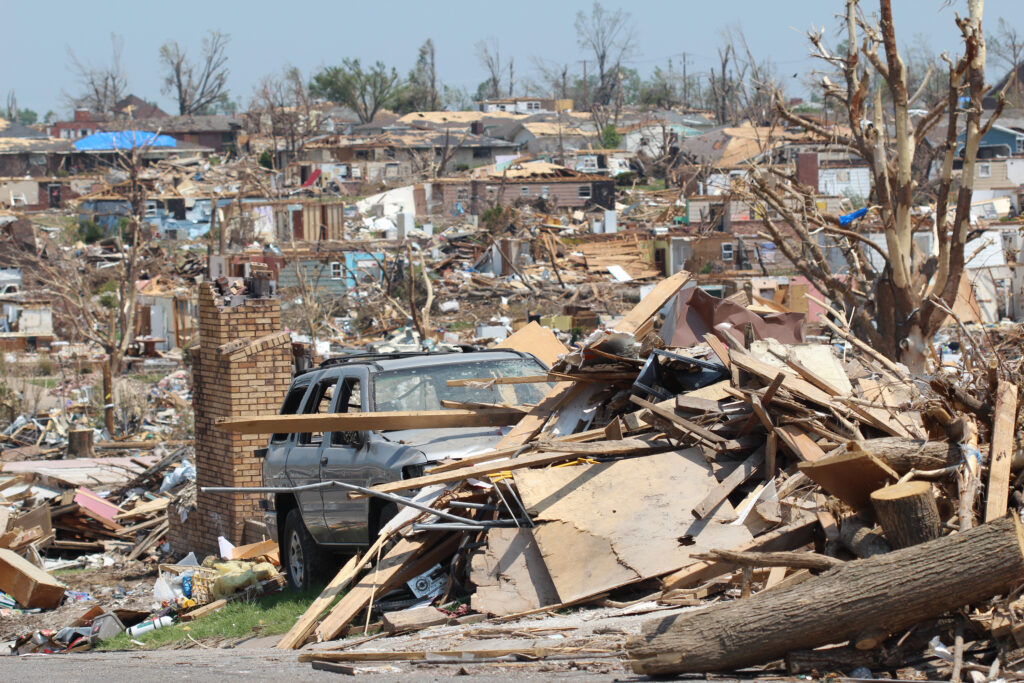
At 5:34 p.m. on May 22, 2011, a tornado touched down southwest of Joplin, Missouri and began moving northeast through the city. In 38 minutes, it killed 161 people, injured more than 1,000, and destroyed or damaged approximately 8,000 structures across a path nearly a mile wide and 22 miles long. It remains the deadliest single tornado in the United States since modern record-keeping began — and one of the most studied, because what happened in Joplin that Sunday afternoon revealed something important and uncomfortable about the relationship between tornado warnings and human behavior.
A warning had been issued. Most people in Joplin knew a tornado warning had been issued. Many of them died anyway. Understanding why requires moving past the assumption that issuing a warning automatically produces the protective response it’s designed to trigger — an assumption the Joplin tornado forced meteorologists, emergency managers, and behavioral scientists to fundamentally reconsider.
The Storm
The atmospheric setup on May 22, 2011 was unambiguous. The Storm Prediction Center had placed a Moderate Risk for severe weather over the region, and a tornado watch had been in effect for hours before the Joplin storm developed. The watch covered an area that included Joplin, and local National Weather Service forecasters had been monitoring the developing storm environment through the afternoon.
The Joplin tornado formed from a supercell thunderstorm that had been producing severe weather for several hours before reaching the city. A tornado warning was issued at 5:17 p.m. — 17 minutes before the tornado touched down southwest of town. As the storm moved northeast through Joplin, the warning remained in effect and outdoor warning sirens activated.
The tornado was rated EF5 — maximum intensity on the Enhanced Fujita scale, with estimated wind speeds exceeding 200 mph in the most intense portions of the damage path. It was nearly a mile wide at its maximum extent, producing a damage corridor that was too wide for most structures to provide lateral shelter from. The tornado passed directly through densely populated residential and commercial areas, including a hospital, a high school, and hundreds of homes and businesses.
Why People Died With a Warning in Effect
The post-event surveys and behavioral research conducted after the Joplin tornado produced findings that challenged prevailing assumptions about how tornado warnings work in practice.
Warning fatigue. Joplin had experienced a tornado warning earlier the same day that produced no tornado. Many residents, hearing the sirens again in the late afternoon, assumed the second warning was similarly unfounded — another false alarm in a spring that had already delivered several. This phenomenon, called warning fatigue or cry-wolf effect, had been documented in research before Joplin but was dramatically illustrated by the event’s aftermath. Survivors reported explicitly deciding not to take shelter because the previous warning had been a false alarm. The warning system’s credibility had been partially eroded by prior warnings that didn’t produce the threatened storm.
Confirmation-seeking behavior. Research found that many people who heard the warning did not immediately seek shelter but instead took time to gather additional confirmation — looking out windows, checking phones, calling family members — before deciding whether to act. This confirmation-seeking consumed the warning lead time that was intended for shelter-seeking. By the time people confirmed the tornado was real and immediate, the time available for reaching safe shelter had diminished dramatically.
Inadequate shelter options. Joplin’s housing stock included a large proportion of structures without basements — the safest shelter from a violent tornado. Single-story wood-frame homes without basements offer minimal protection from EF4 and EF5 wind speeds. Many people who died were sheltering in interior rooms of their homes — the correct action in a house without a basement — but the structures themselves couldn’t protect their occupants against a tornado of this intensity. The shelter problem was not behavioral but structural: the right behavior in an inadequate shelter still produced deaths.
Siren audibility and comprehension. Some residents reported not hearing the sirens, or hearing them but not understanding they indicated a tornado warning specifically rather than a general alert. The outdoor warning siren system is designed to prompt people to seek additional information from indoor sources — radio, television, weather apps — not to convey the specific nature of the threat. People who heard sirens but didn’t access indoor media may not have understood the severity of what was approaching.
What Changed Because of It
The Joplin tornado produced the most comprehensive review of tornado warning effectiveness since the development of the modern warning system, and several of its findings drove meaningful changes in how warnings are communicated and how emergency management approaches the human response problem.
Wireless Emergency Alerts. The federal Wireless Emergency Alert system — which pushes geographically targeted alerts directly to cell phones within a warning polygon — was in limited deployment at the time of the Joplin tornado. The event accelerated its full deployment, and by 2012 the system was operational across the country. WEA alerts bypass the need for people to be watching television or listening to radio to receive warnings, addressing one of the key gaps revealed by Joplin — that many people simply weren’t connected to warning channels when the tornado struck.
Impact-based warnings. Following Joplin and other high-impact events, the National Weather Service began developing impact-based warning language — adding specific descriptions of the expected damage and threat to life to tornado warnings rather than issuing standardized warning text regardless of storm intensity. A warning for a confirmed EF5 tornado capable of destroying well-built homes now includes language explicitly stating that the tornado can kill people in well-constructed homes and that those without underground shelter should seek reinforced interior rooms. The intent is to communicate the severity gradient that the categorical warning system doesn’t convey — a tornado warning for a brief EF0 and a tornado warning for a violent EF5 supercell are issued with identical terminology, but the threat to life is categorically different.
Warning fatigue research. Joplin generated substantial academic interest in warning fatigue and the cry-wolf effect, producing research on how false alarm rates affect behavioral compliance with subsequent warnings. This research has informed ongoing discussions about verification standards for tornado warnings — the tradeoff between warning lead time (which requires issuing warnings before visual confirmation) and false alarm rates (which erode public confidence). The false alarm rate for tornado warnings remains a challenge the warning system has not fully resolved.
Community shelter infrastructure. The inadequate shelter available to many Joplin residents prompted discussions about public shelter infrastructure — community tornado shelters, storm-resistant safe rooms in public buildings, and building codes that require or incentivize below-grade shelters in new residential construction. These changes have proceeded unevenly across different jurisdictions, but the Joplin experience created sustained momentum for shelter infrastructure investment that continues today.
The Memorial Day Week Context
May 22, 2011 fell on a Sunday in late May — the same week as Memorial Day, a time when people are outdoors, distracted by the beginning of summer, and perhaps less attuned to weather threats than they would be on a Wednesday in the middle of the workweek. The combination of a holiday weekend atmosphere and warning fatigue from an earlier false alarm that day illustrates how behavioral factors that have nothing to do with the meteorology can determine outcomes in severe weather events.
The Joplin tornado arrived with adequate warning. The warning system worked as designed — a warning was issued with 17 minutes of lead time, sirens activated, alerts were available on television and radio. The gap between the warning that was issued and the deaths that occurred was not a failure of meteorological science. It was a failure of the connection between warning issuance and protective action — a gap that exists in every severe weather event and that the post-Joplin research and operational changes have worked to narrow without fully closing.
What It Means for Today
Fourteen years after Joplin, the warning system is better — WEA alerts reach more people more directly, impact-based language communicates severity more explicitly, and the behavioral science of warning response is better understood. But the fundamental challenge Joplin illustrated has not been solved: issuing a warning does not automatically produce shelter-seeking behavior, particularly when warning fatigue, confirmation-seeking, or inadequate shelter options intervene.
The lesson that every tornado season should reinforce is that a tornado warning is not a notification to evaluate — it is a directive to act immediately. The time spent looking out the window to confirm the storm is real, calling family members to check whether they’ve heard the warning, or waiting for additional confirmation is time that should be spent in the safest available shelter.
Joplin, on this date in 2011, demonstrated what happens when that time is spent otherwise. The warning was real. The tornado was real. The 17 minutes of lead time was real. The people who used it to confirm rather than to shelter are the reason the post-event research found what it found — and the reason the warning system has spent the subsequent fourteen years trying to build a more direct path from the alert to the action it’s designed to produce.