When the Plains Came to Washington
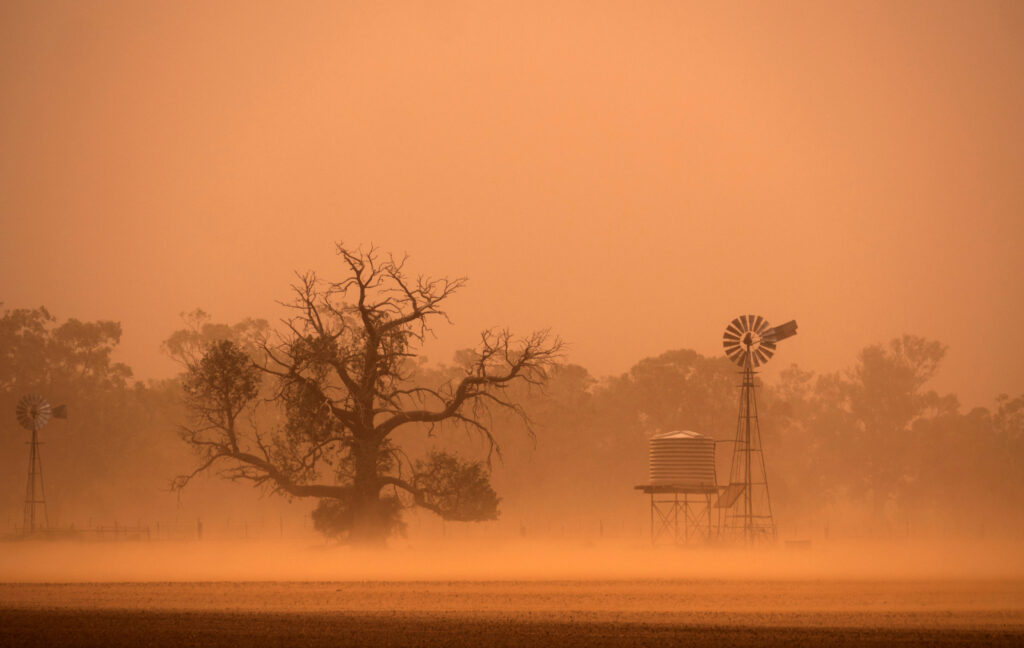
On the morning of May 11, 1934, residents of New York City, Washington D.C., and Boston looked out their windows and found a strange, brownish haze obscuring the skyline. Ships 300 miles off the Atlantic coast reported dust settling on their decks. The sun appeared red through the murk. In Washington, senators debating agricultural policy in the Capitol could see the evidence of that policy’s failure drifting past the windows.
The dust that had crossed half a continent to reach the East Coast had left the Great Plains two days earlier, on May 9, 1934, carried by a weather system of extraordinary scope. The storm of May 9-11, 1934 was not the most famous event of the Dust Bowl era — Black Sunday in April 1935 holds that distinction — but it was in many ways the most consequential: larger in geographic reach, more politically visible, and arriving at exactly the moment when Congress was debating the legislation that would shape the federal response to the ecological catastrophe unfolding on the Plains.
The Storm
The weather system that produced the May 1934 dust storm was a powerful extratropical cyclone tracking northeast across the Great Plains — the same type of spring storm system that produces severe thunderstorms and tornadoes across the region in normal years. In 1934, with the southern and central Plains in their third year of severe drought and tens of millions of acres of formerly grass-covered land stripped of vegetation and exposed as bare, dry soil, the storm’s winds encountered a landscape with no resistance to offer.
The dust cloud that formed was estimated to be 1,500 miles long and 900 miles wide — an area of sky-darkening dust larger than several European countries combined. At its peak, it contained an estimated 350 million tons of Plains topsoil in suspension — soil that had taken thousands of years to accumulate and that was now moving east at 60 miles per hour.
The storm darkened skies across a swath from the Dakotas to Texas as it gathered material from the parched landscape. It moved northeast with the cyclone’s circulation, crossing the Missouri and Mississippi Valleys, reaching the Great Lakes on May 10, and arriving on the East Coast on May 11. Visibility in Chicago dropped to near zero during the passage. Cleveland residents reported collecting dust from their window ledges. In New York, the dust haze was visible but less dramatic — the storm had spread its burden across a large area by the time it reached the coast.
The dust that settled on ships in the Atlantic Ocean was perhaps the most dramatic physical demonstration of how far the Plains topsoil had traveled. Sailors 300 miles offshore collected the material and reported it to meteorologists, providing evidence that North American topsoil was literally being deposited in the ocean.
The Political Moment
The timing of the May 1934 dust storm made it uniquely politically significant in ways that Black Sunday, devastating as it was, could not replicate.
Congress was in session in Washington when the dust arrived. The New Deal agricultural programs of Franklin Roosevelt’s first year had begun reshaping federal farm policy, but the specific legislation that would establish the Soil Conservation Service — the agency that would eventually address the root causes of the Dust Bowl — had not yet passed. Senators and representatives who had been abstractly debating the scale of the Plains emergency could now see its physical evidence drifting past the Capitol windows.
The symbolism was not lost on anyone. Hugh Hammond Bennett, the soil scientist who had been advocating for federal soil conservation programs for years, was testifying before a Senate committee about the need for soil conservation legislation on May 11 — the day the dust arrived in Washington. According to accounts of the hearing, Bennett paused his testimony as a Senate aide reported that the dust storm had reached Washington, and gestured toward the windows where the brownish haze was visible. The committee voted shortly thereafter to support the legislation Bennett had been advocating. The Soil Conservation Act passed in 1935, establishing the Soil Conservation Service as a permanent federal agency.
Whether the dust storm’s arrival was coincidental or strategically timed — Bennett knew the storm was coming and some accounts suggest he deliberately prolonged his testimony to coincide with its arrival — the effect was real. The federal response to the Dust Bowl accelerated measurably in the months following the May 1934 storm.
What the Dust Represented
The soil that darkened East Coast skies in May 1934 was not just an atmospheric curiosity. It was the agricultural foundation of the central United States — the accumulated organic matter of thousands of years of prairie ecosystem development — being permanently redistributed. Topsoil that took a millennium to form was being lost in a single storm.
The rate of soil loss during the Dust Bowl was staggering by any measure. Estimates suggest that during the worst years, the southern Plains lost topsoil at rates of several inches per year across millions of acres. An inch of topsoil represents roughly 500 years of natural soil formation processes. The soil settling on Atlantic ships in May 1934 was, in a literal sense, irreplaceable — not on any human timescale.
This permanence distinguishes the Dust Bowl from other weather disasters covered in this series. A flood destroys structures and crops but leaves the land. A tornado devastates a community but the soil remains. The Dust Bowl exported the land itself — the productive capacity of the Plains — to the ocean floor and the streets of eastern cities, where it was useless. The farms that lost their topsoil in 1934 were permanently diminished in productivity even after rain eventually returned and the crisis eased.
The Storm in Context
The May 1934 storm occurred at what would prove to be the midpoint of the Dust Bowl era. The drought that had begun in 1931 would continue in most affected areas until 1939. Between the 1934 storm and the end of the drought, the region would experience dozens of major dust events, including Black Sunday in April 1935 — covered in an earlier Weather Daily piece — and a series of severe storms in 1936 and 1937 that rivaled 1934 in intensity.
The federal response that accelerated after the 1934 storm — the Soil Conservation Service, the Prairie States Forestry Project that planted a shelterbelt of trees across the Plains, the Agricultural Adjustment Administration programs that paid farmers to reduce cultivation of vulnerable land — gradually improved conditions on the Plains even before the drought ended. By the late 1930s, conservation tillage practices, windbreaks, and reduced cultivation had meaningfully reduced dust storm frequency in some areas, demonstrating that human management choices could mitigate the worst effects of the drought even if they couldn’t end it.
Dust Still Moves
The conditions that produced the 1934 storm — drought, bare soil, strong spring winds — are not historical anomalies confined to the 1930s. Dust storms of significant scale occur across the southwestern United States and southern Plains in most years during drought periods, and the 21st century has seen several events that recalled Dust Bowl conditions, particularly during the drought years of 2011-2012 when large dust storms struck Arizona, Texas, and Oklahoma.
The topsoil conservation work that the 1934 storm helped inspire — now embedded in federal farm programs, conservation tillage practices, and cover cropping requirements — has significantly reduced the vulnerability of Plains agriculture to drought-triggered dust events compared to the 1930s. But the underlying vulnerability remains: bare, dry soil and strong spring winds will always produce dust. The scale of the problem depends entirely on how much bare soil is available when the winds arrive.
The May 1934 storm sent Plains topsoil to ships in the Atlantic Ocean. The soil conservation programs it helped inspire have kept a significant portion of what remained in place in the decades since. It was a catastrophic demonstration of what happens when agricultural practices remove the biological infrastructure that holds a landscape together — and a turning point, however belated, toward understanding that the land itself requires stewardship rather than simply extraction.