The Fur Is Everywhere. Here’s Why — and What to Do About It.
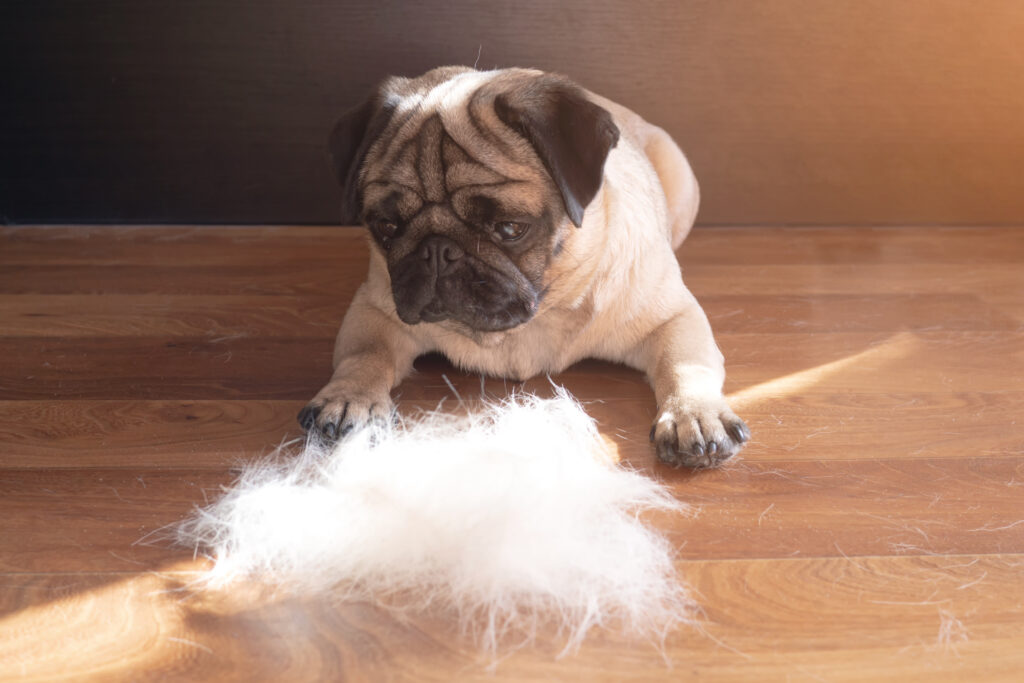
May is peak shedding season for dogs and cats across most of the country, and if you share your home with a double-coated breed, you already know what that means: fur on the furniture, fur on your clothes, fur in your food, fur materializing in rooms the pet hasn’t visited in days. It seems impossible that any animal could produce this much hair and still have any left on their body — yet they always do.
The shedding happening right now is not random, not a sign of poor health, and not something that better nutrition alone will eliminate. It is a biological response to specific environmental signals — primarily changing light levels and temperature — that is deeply embedded in the physiology of domestic dogs and cats. Understanding what triggers it, how the process works, and what actually helps manage it makes the next few weeks significantly more manageable.
Why Pets Shed: The Photoperiod Signal
The primary trigger for seasonal shedding in dogs and cats is not temperature — it’s light. Specifically, it’s the change in day length, called photoperiod, that animals’ bodies use to track seasons and regulate biological cycles including coat growth and shedding.
Dogs and cats that live primarily outdoors or in naturally lit environments track photoperiod through photoreceptors in the eye that signal the brain’s pineal gland, which regulates melatonin production. As days lengthen in spring, melatonin decreases — the same mechanism that affects human mood and sleep through the season. This hormonal shift signals hair follicles to enter a new growth phase, pushing out the dense winter undercoat that has been providing insulation against cold.
This is why shedding peaks in spring rather than directly tracking temperature: it’s responding to light levels that reliably predict the coming warm season rather than waiting for temperatures to actually arrive. A dog in a warm climate that never experiences true winter cold still sheds heavily in spring because the light signal is present regardless of temperature.
Pets that live primarily indoors under artificial lighting experience a disrupted photoperiod signal — the relatively constant artificial light environment moderates the seasonal shedding peaks and produces more continuous, year-round shedding rather than the dramatic seasonal dumps of outdoor animals. This is why indoor cats often seem to shed continuously rather than in distinct seasonal waves, while a dog that spends significant time outdoors may have a more pronounced and concentrated spring shed.
The Two-Coat System and Why It Matters
Understanding shedding requires understanding coat structure, because dogs and cats with different coat types shed very differently and require different management approaches.
Double-coated breeds — those with both a dense, soft undercoat and a coarser outer coat of guard hairs — produce the most dramatic seasonal shedding. The undercoat is the insulating layer that keeps the animal warm in winter; in spring, this layer is shed almost entirely and replaced with a lighter summer undercoat. Breeds in this category include German Shepherds, Huskies, Golden Retrievers, Labrador Retrievers, Corgis, Bernese Mountain Dogs, and most herding and working breeds. The volume of undercoat these breeds can release in spring is genuinely extraordinary — groomers sometimes collect enough fur from a single session to stuff a pillow.
Single-coated breeds — including most Poodles, Shih Tzus, Bichons, and several terrier breeds — shed much less dramatically because they lack the dense undercoat that undergoes seasonal replacement. Their hair grows continuously and is lost gradually rather than in seasonal dumps, which is why these breeds are often marketed as hypoallergenic (though no dog is truly hypoallergenic — it’s the reduced dander and lower shedding that makes them more tolerable for allergy sufferers).
Cats are predominantly double-coated, with a dense undercoat and coarser guard hairs, which is why even short-haired cats shed substantially in spring. Long-haired cats like Maine Coons, Persians, and Norwegian Forest Cats shed the same volume of fur but in longer fibers that mat more readily and are more visible on surfaces.
What’s Normal and What Isn’t
Heavy shedding in May is normal. There are, however, shedding patterns that indicate something other than seasonal coat transition.
Patchy or asymmetric hair loss — bald spots, thinning in specific areas rather than overall — is not normal shedding and warrants veterinary evaluation. It can indicate skin infections, allergies, hormonal imbalances including hypothyroidism or Cushing’s disease, or parasites. Normal shedding produces even thinning across the body, particularly of the undercoat, not discrete bald patches.
Excessive shedding accompanied by other symptoms — changes in skin condition, increased itching, changes in coat texture or sheen, lethargy, or weight changes — warrants a veterinary visit regardless of the season. Spring shedding sometimes coincides with allergy flares that cause additional coat and skin issues, and distinguishing seasonal shedding from allergy-related hair loss requires professional evaluation.
Cats that are grooming excessively — licking specific areas to the point of creating bald patches — are exhibiting a stress or allergy behavior, not shedding. This is called psychogenic alopecia and is distinct from normal shedding.
What Actually Helps: Grooming During Peak Shed
The most effective intervention for managing spring shedding is consistent, appropriate grooming — specifically, tools and techniques that reach the undercoat rather than just moving surface fur around.
For double-coated dogs, the most effective grooming tool for spring shedding is an undercoat rake or a deshedding tool like the Furminator or similar products designed to reach through the outer coat and remove loose undercoat. Standard bristle brushes and slicker brushes do not effectively reach undercoat and primarily groom the outer guard hairs, which shed less. Reaching the undercoat requires a tool specifically designed to penetrate to that layer.
Brushing frequency during peak shed should increase to daily or every other day for heavy-shedding breeds. The fur that comes out on the brush is fur that doesn’t end up on your furniture, clothes, and floors. Ten to fifteen minutes of daily brushing during the peak shedding period makes a dramatic difference in the amount of fur deposited around the house.
Professional grooming — specifically a de-shedding treatment — is worth scheduling for double-coated dogs during spring. Professional groomers use high-velocity dryers that blast loose undercoat out of the coat en masse, removing in one session what would take weeks of home brushing to achieve. The results are dramatic and the reduction in home shedding afterward is immediately noticeable. For breeds with particularly dense coats — Huskies, Malamutes, Samoyeds — professional de-shedding treatment in spring is almost essential rather than merely helpful.
For cats, a fine-toothed comb or deshedding glove works well for short-haired cats, while long-haired cats benefit from a wide-toothed comb followed by a slicker brush. Cats that don’t regularly accept brushing should be introduced to grooming tools gradually during calm moments rather than during active shedding when they may already be physically uncomfortable from loosened fur. Cats that groom themselves are ingesting substantial amounts of loose fur during spring shedding, which contributes to hairball formation — the most common spring hairball complaint from cat owners. Daily brushing during peak shed reduces hairball frequency by removing loose fur before the cat ingests it.
Diet, Hydration, and Coat Health
While nutrition doesn’t stop seasonal shedding — which is photoperiod-driven and will happen regardless — it does affect the condition of the coat being shed and the new coat coming in behind it.
Omega-3 fatty acids support skin barrier function and coat quality. Dogs and cats that are deficient in omega-3s often have dull, brittle coats that shed abnormally and produce more dander. Adding a fish oil supplement appropriate for your pet’s size — discuss dosing with your veterinarian — during the shedding season supports coat quality and may modestly reduce the fragmentation of shed fur into fine particles that penetrate everything.
Hydration affects skin and coat health throughout the year but becomes more relevant in spring as temperatures rise and fluid needs increase. Dry skin from inadequate hydration produces more dander and flaky shedding. Ensuring pets have consistent access to fresh water — and for cats, considering wet food supplementation that provides additional moisture — supports the skin condition that underlies coat health.
Accepting the Season
Peak shedding typically runs from late April through June for most double-coated breeds, with the intensity decreasing significantly by midsummer as the winter coat has fully released and the summer coat is established. There is a secondary shedding event in fall as the summer coat gives way to the winter undercoat, though it is typically less dramatic than the spring shed.
No amount of brushing, grooming, or supplementation will make spring shedding stop — it is a fundamental biological response to seasonal signals that is as old as the domestic relationship between humans and dogs and cats. What consistent grooming during this period does is manage where the fur ends up: on the brush rather than on the couch, controlled rather than constant.
The fur everywhere right now is, in its way, a sign of a healthy animal responding exactly as its biology intends to the lengthening days of May. That doesn’t make it less annoying to find in your coffee. But it does make the grooming brush feel like the right response.