Fifty-One Tornadoes in One Afternoon
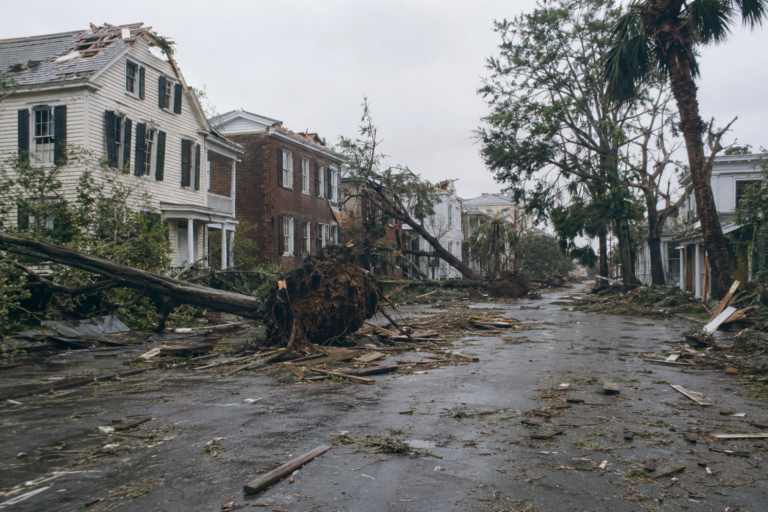
On the afternoon and evening of April 11, 1965 — Palm Sunday — fifty-one tornadoes touched down across six Midwestern states in less than eleven hours. They killed 271 people, injured more than 5,000, and destroyed or damaged tens of thousands of homes across Indiana, Ohio, Michigan, Illinois, Wisconsin, and Iowa. It remains one of the deadliest tornado outbreaks in American history and the most significant tornado event ever to strike the upper Midwest.
The Palm Sunday Outbreak, as it became known, was not just a weather catastrophe. It was a turning point in how tornado warnings were communicated, how emergency management was organized, and how seriously the public came to take severe weather watches and warnings. The modern tornado warning infrastructure that protects the Midwest today was shaped in significant part by the failures and lessons of that April afternoon.
The Atmosphere That Day
The atmospheric setup on April 11, 1965 was textbook severe weather: a powerful low-pressure system tracking northeast across the Plains, drawing warm, moist Gulf air northward into the Midwest ahead of a sharp cold front. The jet stream was positioned directly overhead, providing extreme wind shear. Surface dew points across Indiana and Ohio reached the mid-60s — remarkable for mid-April — while the upper atmosphere remained cold from winter.
The Storm Prediction Center’s predecessor, the Severe Local Storms unit, had issued a severe weather watch for much of the region that morning. The ingredients were identified. What wasn’t anticipated — and couldn’t have been with 1965 technology — was the scale and simultaneous nature of what would develop.
Unlike single-supercell events that produce one or two long-track tornadoes, the Palm Sunday Outbreak was a family outbreak: dozens of supercell thunderstorms developing in rapid succession across a broad area, each capable of producing its own tornadoes. Some storms produced multiple tornadoes in sequence. Others produced single long-track tornadoes that stayed on the ground for tens of miles. The result was a mosaic of destruction that covered an area roughly 450 miles long and 200 miles wide.
The Tornadoes That Defined the Outbreak
Several tornadoes from the Palm Sunday Outbreak stand out for their intensity, path length, or casualties.
The Russiaville-Windfall tornado in Indiana was among the most destructive, cutting a path through Howard and Tipton counties that killed 23 people and destroyed entire neighborhoods. The towns of Russiaville and Windfall were struck within minutes of each other, their residents having no meaningful warning that anything was approaching.
In Michigan, a family of tornadoes struck Washtenaw, Lenawee, and Monroe counties in the late afternoon, killing 44 people — the highest state death toll in the outbreak. The Metamora and Pittsford tornadoes were particularly violent, destroying farms and rural communities across branch county with F4 intensity.
Ohio’s Midwestern communities suffered extensively as storms tracked northeast through the evening hours. Families sheltering in their homes found that the wood-frame construction standard of the era offered almost no protection against the most intense tornadoes.
One of the outbreak’s most haunting individual tragedies occurred in Indiana, where a tornado struck a drive-in theater whose patrons had gathered for an Easter weekend film. Dozens of vehicles were destroyed and multiple people were killed — caught entirely without warning in a location with no shelter whatsoever.
Why the Warnings Failed
The death toll of 271 reflected not just the outbreak’s scale and intensity, but the state of tornado warning technology and communication in 1965.
The National Weather Service had been issuing tornado watches since the early 1950s — broad-area alerts indicating that conditions were favorable for tornado development. What didn’t yet exist in effective form was the granular, real-time tornado warning system that would develop over the following decade. Radar was available but primitive by modern standards: early-1960s radar could detect precipitation but couldn’t clearly identify rotation within storm cells or distinguish tornado-producing supercells from ordinary thunderstorms.
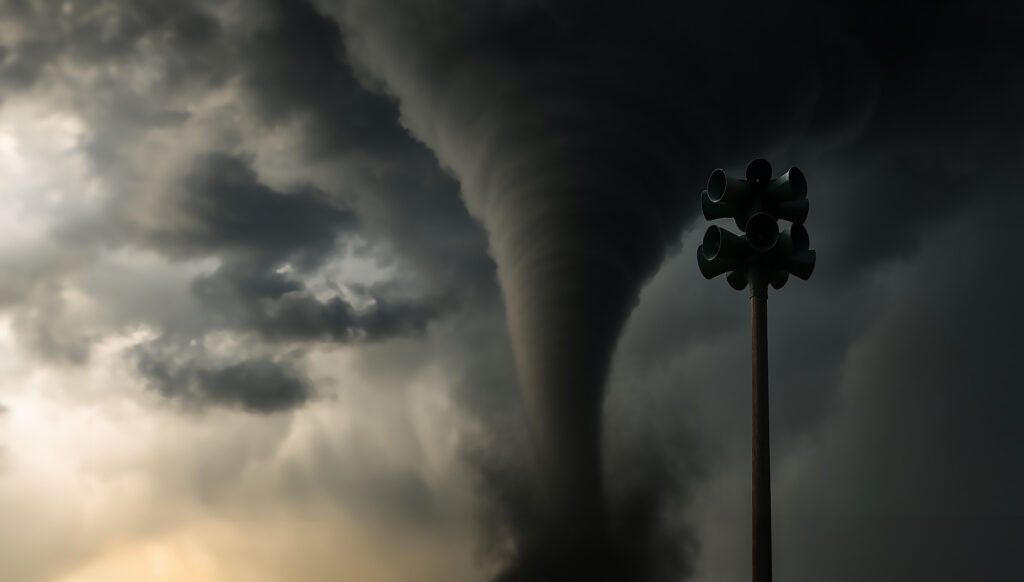
Warning dissemination was the other critical failure. Even when forecasters identified a tornado threat, the pathways for getting that information to the public were limited. Television and radio broadcasts were the primary communication channels, and many people in rural areas weren’t watching or listening at the critical moments. Outdoor warning sirens existed in some communities but not others, and their coverage was inconsistent. There were no weather radios in homes, no emergency alert systems, no way to push a warning directly to individuals.
The result was that many of the 271 people who died had no idea a tornado was approaching. They were in their homes, in their yards, in their cars — going about a pleasant Palm Sunday afternoon — with no awareness that the atmosphere above them was producing some of the most violent storms of the decade.
What Changed Because of It
The Palm Sunday Outbreak produced a wave of reform in tornado preparedness that transformed public safety infrastructure across the Midwest over the following decade.
The National Weather Service accelerated the development and deployment of a more comprehensive tornado warning system, including the distinction between tornado watches (conditions favorable) and tornado warnings (tornado observed or indicated by radar) that remains the core of the current system. The watch/warning framework existed before 1965 but was inconsistently applied and poorly understood by the public; the outbreak drove a major public education effort to clarify what each alert meant and what action it required.
Weather radio networks expanded significantly in the years following the outbreak. The National Oceanic and Atmospheric Administration’s weather radio system, which broadcasts continuous forecasts and warnings on dedicated frequencies, was developed in the late 1960s and early 1970s partly in response to the communication failures of events like the Palm Sunday Outbreak. By the mid-1970s, NOAA Weather Radio receivers had become standard emergency preparedness equipment in homes and businesses across tornado-prone regions.
Community warning siren networks were upgraded and standardized across Indiana, Ohio, and Michigan — the states hit hardest — with new siren installations and regular testing protocols. Emergency management agencies at the county and municipal level were strengthened and given clearer authority to issue local warnings.
The outbreak also accelerated meteorological research into tornado-producing supercells. The storms of April 11, 1965 were documented more thoroughly than any previous outbreak because they struck populous areas where weather observers, emergency personnel, and ordinary citizens provided detailed accounts. That documentation contributed to the growing scientific understanding of supercell structure and tornado formation that eventually enabled the Doppler radar revolution of the 1980s and 1990s.
A Line Between Then and Now
The Palm Sunday Outbreak of 1965 and the tornado warning system that exists today are connected by a direct line of cause and effect. The failures of that afternoon — the inadequate radar, the incomplete warning dissemination, the public unpreparedness — drove investment, research, and policy changes that accumulated over decades into the system that now issues tornado warnings with 13-minute average lead times, delivers those warnings to phones in the affected area automatically, and has driven tornado fatality rates per outbreak dramatically lower than they were in 1965.
A tornado outbreak of comparable scale today would still be catastrophic — no warning system eliminates all casualties. But the death toll would be a fraction of 271, because people in the path of the storms would know they were coming. The Palm Sunday Outbreak is part of the reason why.
The afternoon of April 11, 1965 was sunny and warm across Indiana before the storms developed — a perfect spring day that turned lethal by evening. Every spring since, the atmosphere has assembled similar ingredients over the same geography. The difference is that the system watching for it, warning about it, and communicating that warning to the people in its path is immeasurably better than it was sixty years ago.