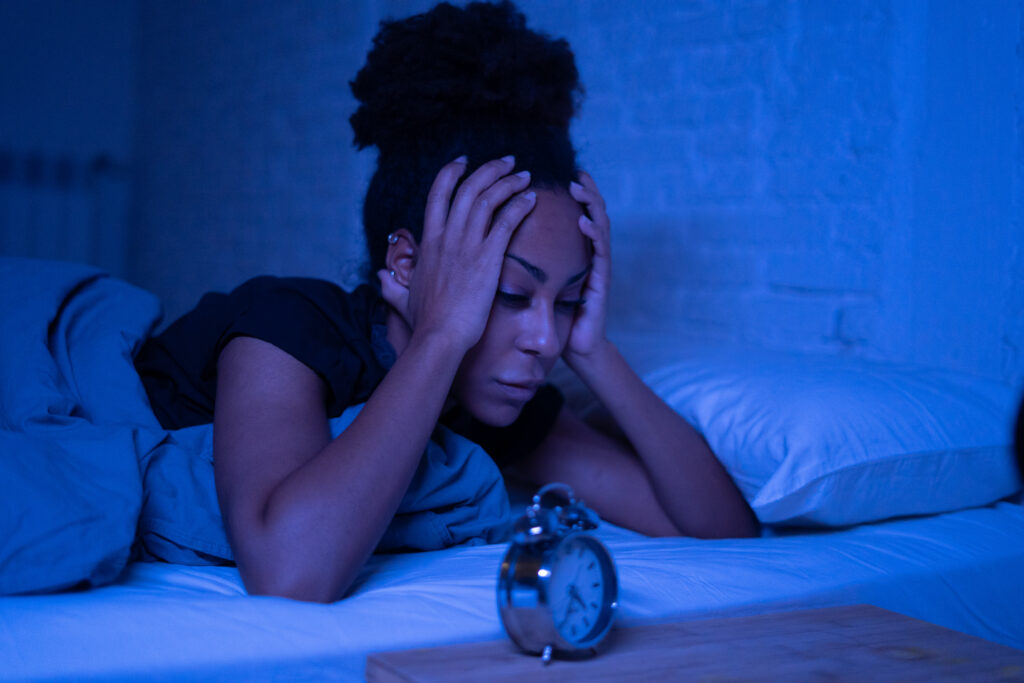
You’re Not Imagining the Restless Nights
Every spring, millions of people notice the same thing: sleep gets worse. They wake earlier than they want to, lie awake longer at night, feel groggy despite spending enough hours in bed, or find their carefully maintained sleep schedule suddenly unreliable. Conventional wisdom attributes all of this to the daylight saving time change, and that’s part of it — but only part. Spring disrupts sleep through several distinct mechanisms that stack on top of each other, and understanding them explains why the problem often lingers for weeks past the initial time change.
Daylight Saving Time Delivers a Real Disruption
The spring clock change — losing an hour in mid-March — is the most abrupt of spring’s sleep disruptions, and its effects are measurable. Researchers have documented increases in car accidents, heart attacks, and workplace injuries in the days following the spring change, all consistent with the effects of sleep deprivation and circadian misalignment.
What makes the spring change harder than the fall one is simple arithmetic. Falling back in November gives you an extra hour — your body gets more sleep than it expects, which is manageable. Springing forward cuts an hour from a night’s sleep without warning, and your internal clock doesn’t immediately adjust to match the new schedule. Your circadian rhythm is anchored by light exposure, and the light cues your body uses to regulate sleep and waking are now offset from the clock by an hour.
For most people, full circadian adjustment to the spring time change takes between five and ten days. During that window, you may feel alert later in the evening than your schedule allows, struggle to fall asleep at your intended bedtime, and find early morning waking increasingly difficult. This isn’t willpower or poor sleep hygiene — it’s biology catching up to an abrupt change.
Earlier Sunrises Are Working Against You
Beyond the time change, spring brings a rapid and ongoing shift in sunrise time that continues for weeks. In early March, sunrise at mid-latitudes occurs around 6:30 a.m. By late March, it arrives before 6:00 a.m. By late April, it may be before 5:30 a.m. — and it keeps moving earlier through June.
This matters because light is the primary signal your brain uses to regulate melatonin production. Melatonin — the hormone that induces drowsiness and supports sleep — is suppressed by light exposure. In winter, late sunrises allow melatonin production to continue well into the morning, making it easier to sleep until your alarm. As spring advances and sunrises arrive earlier, light enters bedrooms earlier, melatonin is suppressed sooner, and sleep becomes shallower and more fragile in the final hours of the night.
People who sleep in rooms without blackout curtains often experience this as waking 30 to 60 minutes earlier than intended, feeling unable to fall back asleep despite still being tired. This isn’t insomnia in the clinical sense — it’s a natural response to a changing light environment. But it accumulates into meaningful sleep deprivation over weeks if the schedule doesn’t adjust.
Temperature Fluctuations Through the Night
Core body temperature is closely linked to sleep quality. Your body temperature drops as you fall asleep and reaches its lowest point in the early morning hours before beginning to rise again as wake time approaches. This cooling is part of what initiates and maintains sleep. A bedroom environment that supports this natural cooling — typically between 65°F and 68°F for most people — promotes deeper, more restorative sleep.
Spring’s volatile overnight temperatures create a specific challenge. An evening that starts at 60°F can drop into the 40s by 3 a.m., then climb back to 55°F by dawn. Opening windows to enjoy mild spring evenings is appealing, but the resulting temperature swings through the night can pull you out of deep sleep stages at their lowest or highest points without fully waking you — leaving you to feel tired in the morning without knowing why.
Heating systems add another layer of complexity. Many people turn off their heat in response to mild spring days, only to find the house too cold by early morning. The transition from winter’s consistently heated indoor environment to spring’s more variable temperature means there’s no longer a reliable thermal baseline through the night.
More Hours of Evening Light Mean Later Bedtimes
Lengthening days affect sleep not just in the morning but at night. As spring advances, the sun sets later — from around 5:30 p.m. in early March to well past 7:30 p.m. by late April. The longer presence of natural light in the evening delays the brain’s melatonin release, pushing the natural sleep onset time later.
This is a feature, not a bug, in evolutionary terms — longer days in spring and summer signal to the body that there is more time for activity, and sleep timing shifts accordingly. But in a world governed by fixed schedules — work, school, morning commitments — shifting sleep onset later without shifting wake time later simply reduces total sleep duration. Many people sleep 30 to 45 minutes less per night in spring than in winter without making any conscious choice to do so.
The effect compounds across weeks. A consistent nightly deficit of 30 to 45 minutes accumulates into hours of lost sleep within a month, with effects on mood, cognition, metabolism, and immune function that may not be immediately obvious but are well-documented in sleep research.
What You Can Do About It
The good news is that most spring sleep disruption is manageable with relatively modest adjustments, and the body does eventually adapt as the season stabilizes.
Blackout curtains are the single most effective intervention for people troubled by early morning light. Even inexpensive blackout curtains or a sleep mask can extend the period of morning sleep by 30 to 60 minutes by blocking the light signal that suppresses melatonin. They’re particularly valuable during the weeks of rapid sunrise advancement in March and April.
Shift your bedtime gradually. Rather than trying to maintain a fixed bedtime that now feels too early given the extended evening light, move it 15 minutes earlier every few days until your schedule aligns with your sleep needs. This is more effective than trying to enforce an earlier bedtime all at once against a body that isn’t ready for sleep.
Manage bedroom temperature actively. Keep a layer of bedding available through spring nights even if evenings feel warm. Consider setting a thermostat to maintain a consistent overnight temperature rather than turning off heat entirely on mild days. The investment in consistent temperature pays clear dividends in sleep quality.
Use morning light strategically. Getting bright light exposure within an hour of your intended wake time — going outside for a few minutes, sitting near a window, or using a light therapy box — accelerates circadian adjustment and helps anchor your body clock to the new schedule. This is especially useful in the two weeks following the spring time change.
Limit evening light from screens. When the sun is setting later and pushing melatonin production back, adding screen light after dark compounds the delay. Dimming screens or using blue-light filtering after 8 p.m. reduces the signal that tells your brain to stay alert.
Spring Sleep Gets Better on Its Own—With a Little Help
By May, most people find their sleep has settled. The circadian adjustment to the time change is long complete, the body has adapted to the new light schedule, and the novelty of spring evenings that felt impossible to cut short has worn off enough to allow reasonable bedtimes again. Summer has its own sleep challenges, but the acute disruption of the spring transition passes.
The weeks in between — late March through April — are the most disruptive. Knowing what’s driving the restlessness makes it easier to address rather than simply endure, and a few targeted adjustments can significantly reduce how much the season’s changes cost you in lost sleep.