Spring Has Its Own Set of Bad Weather Advice
Every season comes with its own collection of folk wisdom, half-truths, and confident misinformation. Winter’s myths tend to involve cold and illness. Summer’s involve heat and hydration. Spring’s myths are a unique mix — some rooted in old agricultural lore, some passed down as common sense, and some that simply sound too logical to question. But several widely repeated beliefs about spring weather don’t hold up under scrutiny, and believing them can leave you underprepared or just plain wrong about how the season works.
Here’s a look at some of the most persistent spring weather myths — and what’s actually true.
Myth: April Showers Bring May Flowers — So April Must Be the Rainiest Month
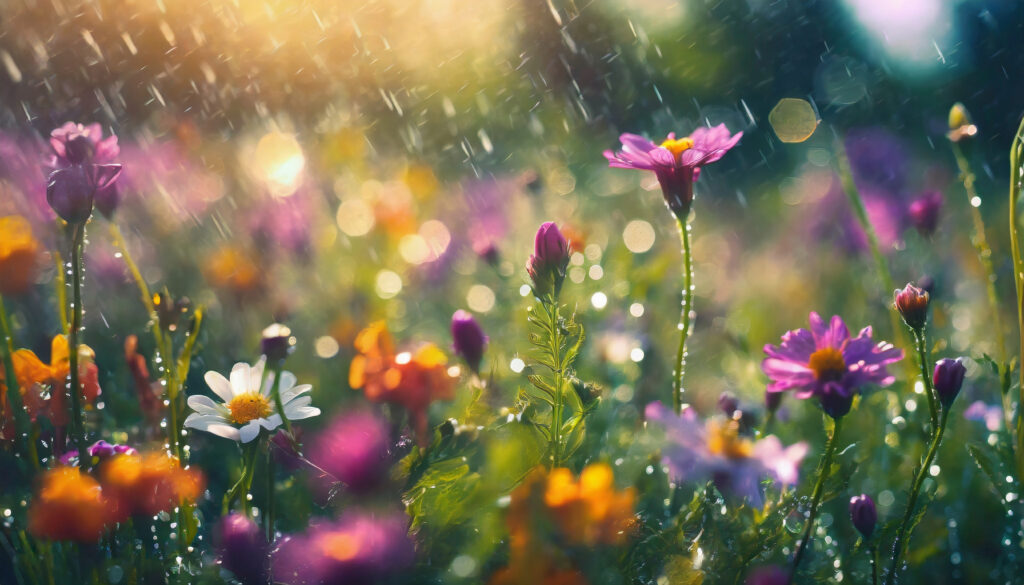
The old rhyme is so familiar it feels like meteorological fact. But April isn’t actually the rainiest month in most of the United States. Depending on where you live, that distinction often belongs to May, June, or even July.
What’s true is that April does tend to be wetter than the winter months that preceded it, so the relative increase in rain feels significant after a drier stretch. Spring also brings more frequent precipitation events — showers and quick-moving storms — even if the total rainfall doesn’t exceed summer months. The rhyme captures a real seasonal shift in feel, if not the actual rainfall record.
Myth: If It Thunders in February, It Will Frost in May
This one has been repeated so long that some people treat it as reliable forecasting. The idea is that an early-season thunderstorm predicts a late frost six to eight weeks later. There is no meteorological basis for this connection whatsoever. A February thunderstorm tells you nothing about May temperatures — the atmosphere simply doesn’t carry information that far forward in a single observable event. Late spring frosts happen in May for reasons entirely unrelated to what occurred in February.
Myth: A Warm March Means a Hot Summer
The logic seems sound: if spring arrives early and warm, summer must be heading in the same direction. But in practice, March temperatures are a poor predictor of summer temperatures. The weather patterns that drive a warm March — typically a displaced jet stream allowing warm air to surge north — are short-term and don’t set the stage for an entire summer. Plenty of warm, early springs have been followed by cool, late summers, and vice versa. Climate patterns like La Niña and El Niño are far better seasonal predictors than the temperature of any single month.
Myth: Spring Rain Is Warmer Than Winter Rain, So It’s Not as Dangerous
Temperature-wise, spring rain is often not as cold as winter rain, but that doesn’t mean it’s less dangerous in all circumstances. Cold spring rain — the kind that falls on a 45°F April afternoon — can still cause hypothermia in someone who gets thoroughly soaked and has no way to warm up. Wet clothing loses nearly all of its insulating value, and spring’s combination of rain, wind, and temperatures in the 40s and low 50s is actually one of the most common scenarios for cold exposure injuries. The danger is underestimated precisely because it doesn’t feel like “real” winter cold.
Myth: You Can Judge the Rest of Spring by the First Warm Day
The first 70°F day of the year has a way of feeling like a promise. People put away coats, open windows, and start making outdoor plans — as if the season has decisively turned. But a single warm day in March or even April is frequently followed by days or even weeks of cold, rain, and in some regions, snow. The atmosphere doesn’t commit to spring because of one warm afternoon. It’s still negotiating between competing air masses for weeks after the calendar changes, and the first warm day is an audition, not an arrival.
Myth: Lightning Only Strikes During Heavy Rain
Many people assume that if rain is light or hasn’t started yet, they’re safe from lightning. This is dangerously wrong. Lightning can and does strike several miles from the center of a thunderstorm, in areas where rain hasn’t arrived yet or has already passed. The rule “when thunder roars, go indoors” exists precisely because the audible range of thunder — roughly ten miles — is a better safety indicator than whether you’re getting wet. If you can hear thunder, you’re close enough to be struck, regardless of whether rain is falling where you’re standing.
Myth: Spring Allergies Are Worst on Rainy Days
It feels intuitive: pollen is a dry-weather nuisance, so rainy days must offer relief. And it’s partly true — during steady rainfall, pollen gets washed out of the air and counts drop. But the period immediately after rain can actually be worse for allergy sufferers, not better. Rain causes pollen grains to burst into smaller fragments that penetrate deeper into airways. Additionally, pollen counts often surge the morning after rain as plants release fresh pollen into the newly cleared air. The worst allergy days of spring are frequently warm, breezy mornings following an overnight rain — not the long, dry stretches that seem like they should be worse.
Myth: March Comes in Like a Lion, Goes Out Like a Lamb (or Vice Versa)
This old saying suggests that whatever March’s weather is at its start, the end of the month will be opposite. It’s a charming bit of folk meteorology with essentially no predictive value. Statistical analysis of historical weather data shows no meaningful correlation between early-March and late-March conditions. Some years the saying holds; many years it doesn’t. March is simply variable throughout — governed by the same competing air masses at the end of the month that battled at its beginning. The saying persists because it’s memorable, not because it works.
The Real Rule of Spring: Expect the Unexpected
If there’s one reliable truth about spring weather, it’s that the season resists generalization more than any other. The same week can bring a sunburn and a frost warning. A warm front can turn a 40°F morning into a 75°F afternoon. A cold snap can follow three weeks of shirtsleeve weather. Spring’s variability isn’t a bug — it’s a fundamental feature of the atmospheric transition from winter to summer, when competing forces haven’t yet settled into the steadier patterns of either season.
The best approach to spring isn’t to rely on rhymes or rules of thumb. It’s to check the forecast, dress in layers, and appreciate the fact that a season this unpredictable is also the one that never gets boring.