The Blue That Seems More Vivid
Look up at a clear spring sky and the blue seems somehow different from winter’s blue—richer, deeper, more vibrant. The clouds appear whiter, the horizon more defined, and the overall clarity seems improved. This isn’t just the psychological lift of warmer weather or the relief of winter ending. Spring skies genuinely have different optical properties than winter skies, and several atmospheric changes combine to alter what you see when you look up.
Understanding why spring skies look different reveals how seasonal changes affect not just temperature and precipitation, but the fundamental composition and behavior of the atmosphere itself—changing the way light travels, scatters, and reaches your eyes.
Less Particulate Matter in the Air
Winter air often contains higher concentrations of particulates—tiny solid particles suspended in the atmosphere. Several sources contribute to winter’s hazier skies:
Wood smoke from fireplaces and wood stoves is far more common in winter. These particles scatter light and create a grayish cast to the sky, reducing the intensity of blue.
Industrial pollution accumulates more readily in winter due to temperature inversions. Cold, dense air near the ground gets trapped under warmer air aloft, preventing vertical mixing and allowing pollutants to build up.
Salt and road dust from winter road maintenance become airborne, particularly on dry winter days when traffic kicks up accumulated material.
Stagnant air patterns in winter mean particulates aren’t dispersed as readily. Weaker winds and stable atmospheric conditions allow pollutants to persist longer.
By spring, several changes reduce particulate loading:
Heating systems run less as temperatures moderate, reducing wood smoke and fossil fuel combustion emissions.
Stronger winds and more active weather mix and disperse pollutants more effectively, preventing accumulation.
Rain washes particulates from the atmosphere frequently. Spring brings more precipitation than late winter in many regions, providing regular atmospheric cleaning.
Temperature inversions break down as spring warming reduces the frequency of trapped air masses.
The result is that spring air typically contains fewer suspended particles than winter air, allowing more direct sunlight to reach your eyes and creating clearer, bluer skies.
Humidity Changes How Light Scatters
The amount of water vapor in the air affects how light scatters and what colors you see. Winter air is typically very dry—cold air can’t hold much moisture, and indoor heating further dehydrates the atmosphere.
Spring brings increasing humidity as temperatures warm and evaporation rates increase. This added moisture changes atmospheric optics:
Dry winter air with low humidity scatters light efficiently but can appear slightly whiter or milky because particles remain dry and light-scattering is less selective by wavelength.
Moister spring air causes some particles to absorb water and increase in size. These larger, water-coated particles scatter light differently, often enhancing the blue while reducing white haze.
The relationship is complex—very high humidity can create haziness, but the moderate humidity typical of spring often produces the most vivid blue skies because it clears some particles while not creating enough water droplets to form visible haze.
The Sun’s Higher Angle Matters
By mid-March, the sun has climbed significantly higher at midday compared to winter. This changing angle affects sky color in several ways:
Light path length through the atmosphere decreases as the sun rises higher. When the sun is low (winter), sunlight travels through more atmosphere, encountering more molecules and particles that scatter blue light and redden the sun. A higher spring sun travels through less atmosphere, meaning less scattering and more intense blue overhead.
Direct versus diffuse light ratios change. Winter’s low sun creates more diffuse, scattered light—the entire sky glows with scattered light. Spring’s higher sun creates stronger direct illumination with less diffuse sky glow, making the contrast between the bright sun and deep blue sky more pronounced.
The “overhead blue” becomes richer as the sun climbs higher because you’re looking through less atmosphere when looking straight up. The shorter path means less scattering of blue light away from your sightline.
Atmospheric Dynamics Increase
Spring brings more dynamic atmospheric conditions—stronger weather systems, more vertical mixing, and greater air mass movement. This dynamism affects sky appearance:
Cloud formation and dissipation happen more rapidly in spring’s unstable atmosphere. You see more dramatic cloud development, clearer edges on clouds, and sharper contrast between clouds and blue sky.
Post-frontal clearing happens frequently in spring as cold fronts passage brings fresh, clean Arctic air masses. The air behind spring fronts is exceptionally clear, having been scrubbed of pollutants during the storm passage.
Vertical mixing is more vigorous in spring. Solar heating of the ground creates thermals and convection that mix surface air with upper-level air, preventing pollutant accumulation near the surface.
This increased mixing and movement creates more variability in sky appearance—spectacularly clear days following storms contrast with hazy conditions when air stagnates briefly.
Vegetation Changes the Atmosphere
By spring, plants are emerging from dormancy and beginning photosynthesis. This biological activity affects the atmosphere in ways that influence sky appearance:
Plants remove CO₂ and particles from the air, providing some filtering effect as leaves emerge and capture dust and pollutants.
Transpiration adds moisture to the atmosphere as plants move water from soil through their tissues and release it through leaves. This process increases humidity and can affect how light scatters.
Pollen release in spring does add particles, but pollen is relatively large and settles quickly, not remaining suspended like fine combustion particles or dust.
The net effect of emerging vegetation is generally positive for air quality and sky clarity, though regional variation exists based on vegetation type and density.
Ozone Levels Shift Seasonally
Ground-level ozone (smog) formation depends on sunlight and temperature. While this is primarily a summer issue, spring marks the beginning of seasonal ozone increases:
Low winter ozone contributes to clearer skies. Ozone formation requires strong sunlight and warm temperatures to drive the chemical reactions, conditions largely absent in winter.
Increasing spring sunlight begins triggering ozone formation, but temperatures are often still too cool for major production, creating a window in spring where sunlight is strong but ozone remains relatively low.
Visibility impacts from ozone become noticeable mainly in summer, so spring represents optimal conditions—strong sun but minimal ozone haze.
Psychological and Perceptual Factors
Part of spring’s apparently bluer sky is genuine perception enhancement:
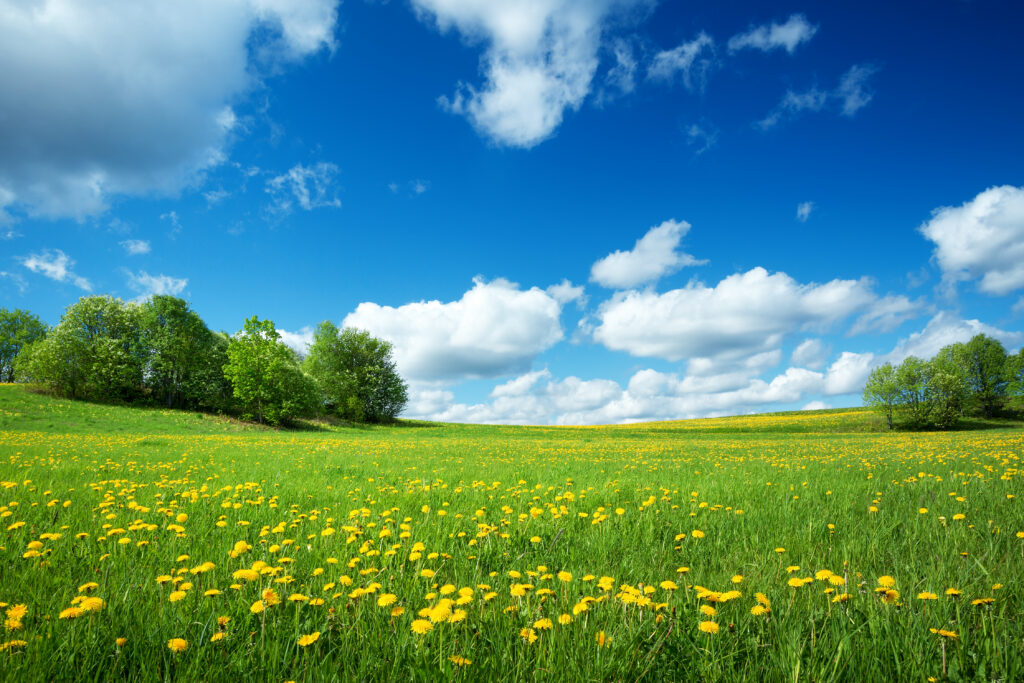
Contrast with winter’s grays makes spring blue seem more vivid. After months of colorless landscapes, bare trees, and frequent overcast conditions, clear spring skies provide dramatic contrast.
Longer daylight exposure means you spend more time looking at the sky and noticing its color. Winter’s short days provide less opportunity to appreciate sky color.
Better mood and mental state in spring may increase attention to environmental beauty. Improved mood from increased daylight and warmer temperatures can enhance color perception and appreciation.
Emerging greens on the ground provide color contrast that makes the blue sky appear more saturated. Blue and green are complementary colors, and seeing them together enhances perception of both.
These psychological factors don’t mean the blue isn’t really different—both objective atmospheric changes and subjective perceptual enhancements combine to create spring’s distinctive sky appearance.
Regional and Weather Variations
The degree of change from winter to spring skies varies by region:
Polluted urban areas may show the most dramatic improvement as reduced heating emissions and increased mixing clear winter’s accumulated haze.
Rural areas with less baseline pollution may show smaller differences, though cleaner air and higher sun still enhance spring blue.
Coastal regions often have relatively consistent sky clarity year-round due to maritime air and regular wind, showing less seasonal variation than interior locations.
Arid regions with consistently low humidity may see less change than humid regions where moisture content shifts dramatically between seasons.
Appreciating the Seasonal Shift
The next time you notice how blue the spring sky appears, remember you’re seeing the combined effects of multiple atmospheric changes: cleaner air with fewer particles, moderate humidity that enhances scattering, a higher sun reducing atmospheric path length, more dynamic weather systems bringing frequent clearing, and the subtle psychological boost of emerging from winter’s gloom.
Spring skies aren’t just metaphorically brighter—they’re genuinely different in color, clarity, and vibrancy due to real physical and chemical changes in the atmosphere overhead. The seasonal shift affects not just what grows on the ground or how warm it feels, but the very appearance of the sky itself, painting the world in deeper blues and sharper contrasts as winter’s atmospheric haze gives way to spring’s clearer, more vibrant conditions.