When Frigid Temperatures Damage Infrastructure
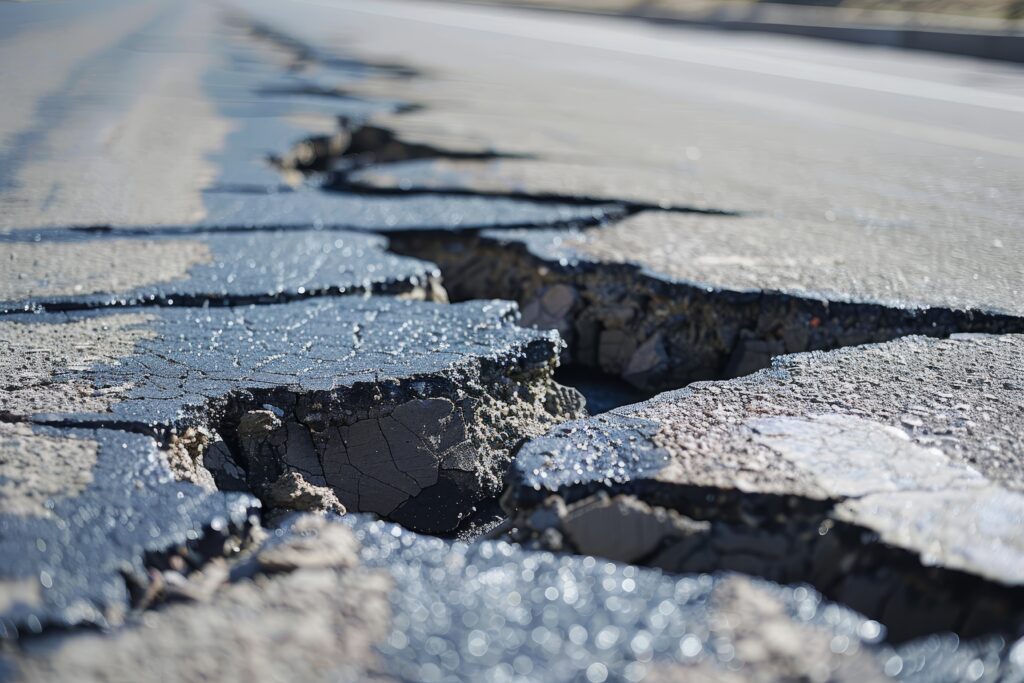
Most people associate road damage with summer heat—asphalt buckling upward on scorching days, creating dangerous bumps and ridges. But extreme cold causes its own set of pavement problems that are less dramatic but equally real. Concrete highways can develop cracks and potholes during severe cold snaps, and even well-maintained roads suffer stress from temperature extremes that work against the materials and design.
Understanding why cold affects pavement reveals the complex engineering challenges of building roads that must withstand temperature swings of 100°F or more between summer highs and winter lows, all while supporting thousands of vehicles daily. The damage winter causes to roads costs billions annually in repairs and creates safety hazards that emerge each spring as temperatures rise.
Thermal Contraction Creates Stress
All materials expand when heated and contract when cooled. This thermal expansion and contraction is predictable and engineers design for it—but the magnitude of temperature change during extreme cold can exceed what the pavement system can accommodate.
Concrete highways are built in sections with expansion joints between them—gaps that allow each section to expand in summer and contract in winter without creating stress. In theory, these joints prevent damage from temperature changes.
However, several complications arise. The joints can become filled with debris over time, preventing free contraction. When temperature drops rapidly and concrete tries to contract, the blocked joints prevent movement. The concrete develops internal stress that can crack the pavement.
Additionally, the temperature gradient through the pavement depth creates differential contraction—the surface cools and contracts faster than the base layer, creating internal stress even within a single slab. This stress concentrates at weak points, leading to cracks.
Asphalt, being more flexible than concrete, handles temperature changes differently. It doesn’t crack as readily from pure thermal stress, but extreme cold makes asphalt brittle and more susceptible to damage from traffic loads and impacts.
The Freeze-Thaw Cycle Destroys Roads
More damaging than cold temperatures alone is the freeze-thaw cycle—repeated freezing and thawing of water within and beneath pavement. This process is the primary mechanism by which cold weather destroys roads.
Here’s how it works: Water infiltrates pavement through surface cracks, joints, and porous areas. When this water freezes, it expands by about 9%. The expanding ice creates pressure within the pavement and base layers, widening existing cracks and creating new ones.
When temperatures rise above freezing, ice melts back to water. The pavement relaxes slightly, but the cracks that formed remain. Water now has easier access to deeper layers. The next freeze cycle repeats the process, progressively damaging the pavement structure.
The base and subgrade layers beneath pavement are particularly vulnerable. Water in these layers freezes and creates ice lenses—layers of ice that form perpendicular to heat flow. These ice lenses lift the pavement above (frost heaving), creating uneven surfaces and breaking the bond between pavement layers.
When ice melts in spring, it leaves voids and weak spots in the base. The pavement above, no longer fully supported, fails under traffic loads—creating the potholes that appear seemingly overnight each spring.
Water Is Always the Problem
Nearly every cold-weather pavement problem involves water. Perfectly dry pavement would suffer minimal damage from temperature changes alone. But keeping water out of pavement systems is nearly impossible.
Water reaches pavement through:
- Cracks and joints in the surface
- Porous or deteriorated pavement that allows infiltration
- Poor drainage that lets water accumulate in base layers
- Groundwater rising from below
- Snow and ice meltwater
Once water enters the pavement system, removing it is difficult. Drainage systems help, but they can’t eliminate water already trapped in base materials or subgrade soils.
This is why spring brings so many potholes—winter’s freeze-thaw cycles damaged the pavement structure, and spring thaw reveals the damage as pavement collapses into weakened base layers.
Geographic Variation in Cold Damage
Regions differ dramatically in how cold affects their roads based on climate patterns:
Areas with consistent cold (northern tier states, Canada) experience less freeze-thaw damage than moderate climates because temperatures stay below freezing for extended periods. Water freezes once and stays frozen rather than cycling repeatedly.
Regions with frequent freeze-thaw cycles (transitional climates where temperatures hover around freezing) experience the most damage. Places like the Ohio Valley, mid-Atlantic states, and parts of the Midwest see numerous freeze-thaw cycles each winter, maximizing pavement damage.
Southern areas that rarely freeze can be devastated when unusual cold snaps occur because their roads aren’t designed for freeze-thaw conditions. A single severe winter event can cause years’ worth of accelerated deterioration.
Design and Materials Make a Difference
Modern highway engineering incorporates cold-weather considerations:
Concrete mix designs include air entrainment—microscopic air bubbles that provide space for water expansion during freezing, reducing internal pressure that causes cracking.
Proper base preparation with well-draining granular materials prevents water accumulation and reduces frost heaving susceptibility.
Adequate pavement thickness provides structural strength to resist damage from frost heaving and traffic loads on weakened spring subgrades.
Surface treatments like seal coats prevent water infiltration through minor cracks before they widen into major failures.
Strategic joint placement and design allows thermal contraction without developing stress cracks.
However, budget constraints often prevent ideal construction. Thin pavements, poor base materials, and deferred maintenance leave many roads vulnerable to cold-weather damage.
Spring Thaw Is Particularly Destructive
The spring thaw period creates the year’s worst road conditions in cold regions. Ice in base layers melts, creating saturated, weak soil that can’t support pavement and traffic loads.
Many jurisdictions impose spring weight restrictions on trucks during this period because heavy vehicles cause excessive damage to weakened pavements. Roads that handled traffic fine when frozen fail rapidly when the base thaws into saturated mud.
This temporary weakening can create permanent damage. Pavement that deflects excessively under spring traffic develops fatigue damage that shortens its overall lifespan even after the base re-strengthens.
Why Potholes Appear Suddenly
Drivers often wonder why potholes seem to appear overnight—roads that were fine yesterday have gaping holes today. The reason is that pothole formation is a rapid failure process once triggered.
The freeze-thaw cycle weakens pavement progressively through winter, but the surface often looks fine because the weakened base isn’t visible. Once temperatures warm in spring, the weakened base loses what strength it had.
Traffic applies stress to the weakened area. Eventually, one vehicle causes the final failure—the surface pavement breaks through into the void beneath, and suddenly there’s a pothole where smooth pavement existed hours before.
The pothole grows quickly as more vehicles strike it, breaking off additional chunks of pavement and excavating more base material. What starts as a small surface break can become a large hole within a day or two of heavy traffic.
Maintenance Challenges in Cold Weather
Repairing cold-weather pavement damage is challenging:
Asphalt patches don’t bond well in cold temperatures. Hot asphalt loses heat rapidly when placed in frozen holes, failing to compact properly or bond to surrounding pavement.
Cold-patch materials work at low temperatures but are temporary fixes that rarely last through spring. They’re stop-gap measures until permanent repairs can be done in warm weather.
Concrete repairs are nearly impossible in freezing conditions because concrete requires above-freezing temperatures to cure properly.
This means much winter road damage must be temporarily patched and then properly repaired later, essentially requiring double work and double cost.
Climate Change Implications
Changing winter patterns affect pavement in complex ways:
More freeze-thaw cycles in transitional zones as winters become less consistently cold could accelerate pavement deterioration.
Reduced deep frost in northern areas might decrease frost heaving but could allow water to remain mobile in base layers year-round, potentially increasing other types of damage.
Increased precipitation as rain rather than snow puts more water into pavement systems without the insulating snow cover that moderates freeze-thaw cycling.
Transportation agencies are beginning to consider these changing patterns in pavement design, though the long lifespan of roads makes adaptation slow.
The Hidden Cost of Cold
The next time you hit a pothole in early spring or notice fresh cracks in winter pavement, remember that you’re seeing the result of months of temperature cycling and water infiltration. That pothole represents hundreds or thousands of freeze-thaw cycles that progressively weakened the pavement structure until final failure occurred.
Cold weather road damage costs billions annually in the United States alone—money spent patching potholes, resurfacing damaged roads, and ultimately rebuilding pavements that failed prematurely due to freeze-thaw damage. It’s a hidden cost of winter that affects everyone who drives, even if we only notice it when our car strikes a pothole hard enough to damage a tire or wheel.
Understanding why cold damages roads helps explain why spring road conditions are often worse than winter, why some regions have more severe pothole problems than others, and why road construction and maintenance are such constant expenses in cold-climate regions. Pavement engineering is an ongoing battle against thermal stress, water infiltration, and the destructive power of freezing water—a battle that winter wins more often than highway departments would like.