America’s Strangest Weather Tradition
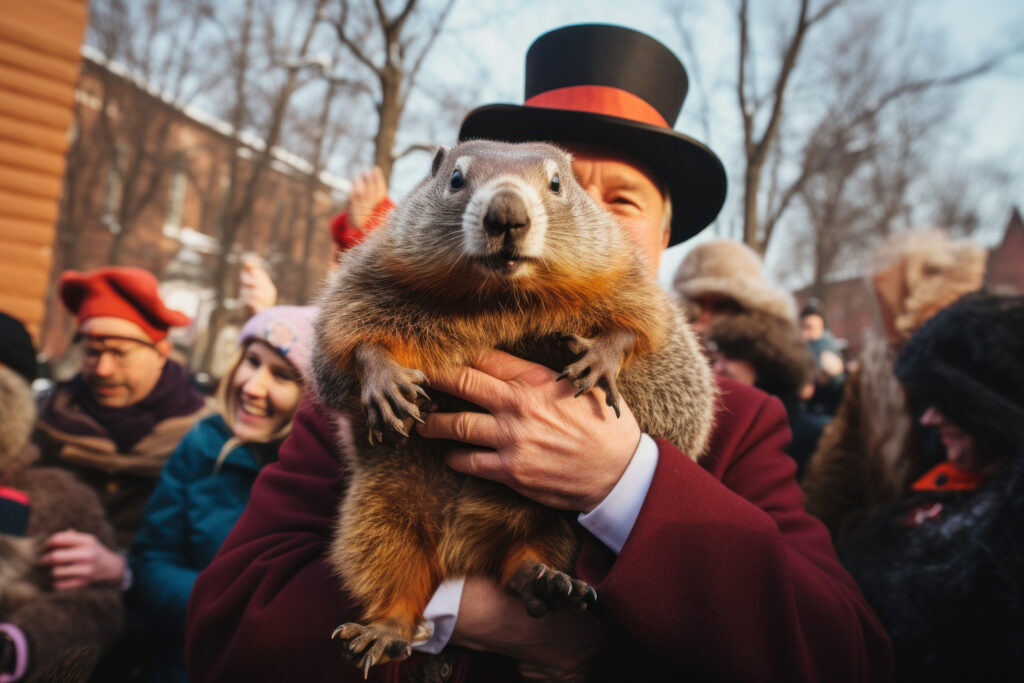
Every February 2nd, thousands of people gather in Punxsutawney, Pennsylvania, to watch a groundhog named Phil emerge from his burrow. According to tradition, if Phil sees his shadow, we’re in for six more weeks of winter. If he doesn’t, spring will arrive early. News crews cover the event live, and the prediction makes headlines across the country. But can a rodent actually forecast the weather—or is Groundhog Day just charming folklore with no scientific basis?
The short answer: groundhogs have no special ability to predict weather patterns. The tradition is pure entertainment, not meteorology. But the story behind Groundhog Day reveals something interesting about how humans have always tried to find patterns in nature and predict the seasons to come.
Where the Tradition Comes From
Groundhog Day has roots in ancient European traditions tied to the astronomical midpoint between the winter solstice and spring equinox. In many cultures, this date—early February—was seen as a turning point when people began watching for signs that winter might be ending.
German immigrants brought a tradition called Candlemas Day to Pennsylvania, which included watching for animals emerging from hibernation as a sign of coming spring. Badgers filled this role in Germany, but groundhogs were abundant in Pennsylvania, so the tradition adapted. The first official Groundhog Day celebration in Punxsutawney took place in 1887, and the event has continued ever since.
The logic behind the shadow prediction seems to be that a sunny day in early February (when Phil would see his shadow) might indicate cold, clear weather associated with high pressure systems that often bring prolonged winter conditions. A cloudy day might suggest an approaching weather system that could bring warmer temperatures. But this reasoning doesn’t hold up to scientific scrutiny.
How Accurate Are Groundhog Predictions?
Punxsutawney Phil’s handlers claim he’s been accurate 100% of the time, but independent analysis tells a very different story. Studies examining Phil’s predictions against actual weather data over many decades show his accuracy rate is around 39%—worse than a coin flip.
Other famous weather-predicting groundhogs across North America don’t fare much better. Staten Island Chuck, Wiarton Willie in Ontario, and various regional groundhogs make their own predictions each year, and they frequently contradict each other. If groundhogs truly could sense coming weather patterns, you’d expect some consistency. Instead, the predictions are essentially random.
This makes perfect sense when you understand what’s actually happening when a groundhog emerges in early February. Groundhogs don’t fully emerge from hibernation until sometime between late February and mid-March, depending on the local climate and the individual animal. The Groundhog Day ceremony involves handlers bringing Phil out of his climate-controlled home specifically for the event. He’s not naturally emerging and checking the weather—he’s being presented for a celebration.
Why We Keep Doing It Anyway
If groundhogs can’t predict weather, why does this tradition persist? Because Groundhog Day serves purposes that have nothing to do with accurate forecasting.
The celebration provides a midwinter morale boost when many people are experiencing cabin fever and seasonal mood changes. It’s a moment of levity and community gathering during the darkest, coldest part of the year. The event brings people together, generates tourism revenue for small towns, and offers a reason to think about spring even when it still feels far away.
The tradition also taps into something deeply human: our desire to find patterns and meaning in nature. For thousands of years before modern meteorology, people looked to animal behavior, plant growth, and atmospheric signs to predict weather and plan agricultural activities. Groundhog Day is a vestige of that older relationship with the natural world, maintained now more for its cultural value than its predictive power.
What Actually Determines When Spring Arrives
Real spring weather patterns depend on complex interactions between ocean temperatures, jet stream positions, atmospheric pressure systems, and broader climate patterns like El Niño and La Niña. These factors operate on regional, continental, and global scales—far beyond what any animal could sense in early February.
Meteorologists use sophisticated computer models, satellite data, and decades of historical climate information to make seasonal forecasts. Even with all this technology and data, predicting weather more than about two weeks in advance remains extremely challenging. The atmosphere is a chaotic system where small changes can produce large, unpredictable effects over time.
Some animals do respond to real environmental cues that correlate with seasonal changes. Birds migrate based on day length and temperature shifts. Some mammals emerge from hibernation when ground temperatures and food availability reach certain thresholds. But these are responses to conditions that are already occurring or have recently occurred—not predictions of future weather weeks or months ahead.
Other Animal Weather Myths Worth Questioning
Groundhogs aren’t the only animals credited with weather prediction abilities. Woolly bear caterpillars supposedly forecast winter severity based on their band colors (they don’t—the bands indicate the caterpillar’s age and species). Cows lying down are said to predict rain (they lie down for many reasons unrelated to weather). Birds flying low supposedly signal storms (they may adjust flight altitude based on air pressure, but this indicates current conditions, not future forecasts).
These folk traditions often contain a kernel of observation about animal behavior, but the predictive claims don’t hold up to scientific testing. Animals are remarkable at sensing immediate environmental conditions and responding to seasonal cycles, but they can’t forecast future weather any better than humans could before modern meteorology.
Enjoy the Tradition, Trust the Forecast
There’s nothing wrong with celebrating Groundhog Day and enjoying the tradition. The event is fun, harmless, and brings communities together at a time of year when people need something to look forward to. Just don’t plan your spring planting schedule or vacation timing based on what Phil sees when he emerges.
For actual weather forecasting, stick with meteorologists who use science-based methods and can provide probability-based predictions with realistic confidence levels. They won’t give you a simple yes-or-no answer about spring’s arrival, but they’ll give you something far more valuable: accurate information about what’s actually likely to happen with your local weather in the days and weeks ahead.
And if you’re wondering when spring will truly arrive in your area, the answer has more to do with your latitude, typical weather patterns for your region, and current climate conditions than whether a groundhog saw his shadow in Pennsylvania. But it’s still fun to watch Phil make his prediction—just don’t bet on it.