One of the Most Dangerous Weather Myths
“Lightning never strikes the same place twice” is one of the most repeated weather sayings—and one of the most dangerously wrong. This myth has persisted for centuries, possibly offering false comfort to people seeking shelter during storms. In reality, lightning can and does strike the same location multiple times, sometimes even during the same storm. Understanding the truth about lightning behavior could save your life.
Lightning Strikes Where Physics Dictates, Not Random Chance
Lightning follows the path of least resistance between a charged cloud and the ground. Tall objects, metal structures, and elevated points naturally become preferred targets because they reduce the distance electricity needs to travel. Once a location has proven to be a good conductor during one strike, there’s absolutely nothing preventing it from being struck again—in fact, the same favorable conditions that caused the first strike are likely still present.
The Empire State Building in New York City gets struck by lightning approximately 25 times per year. Communications towers, church steeples, and isolated tall trees are hit repeatedly, year after year. These aren’t coincidences or exceptions to a rule—they’re proof that the “rule” itself is fiction.
Why the Myth Persists Despite the Evidence
The saying probably endures because lightning strikes to any single small location are relatively rare events. If you’re standing in an open field during a thunderstorm (which you absolutely should not be), the odds of being struck at that exact moment are low. The odds of being struck twice in the same spot seem astronomically small—but that’s a misunderstanding of probability.
Lightning doesn’t remember where it struck before and avoid that location. Each strike is an independent event based on current atmospheric conditions, ground conductivity, and the presence of tall objects or conductive materials. A tree that was just struck is still the tallest object in the area, making it an equally attractive—or perhaps even more attractive—target for the next bolt.
Multiple Strikes Happen More Often Than You Think
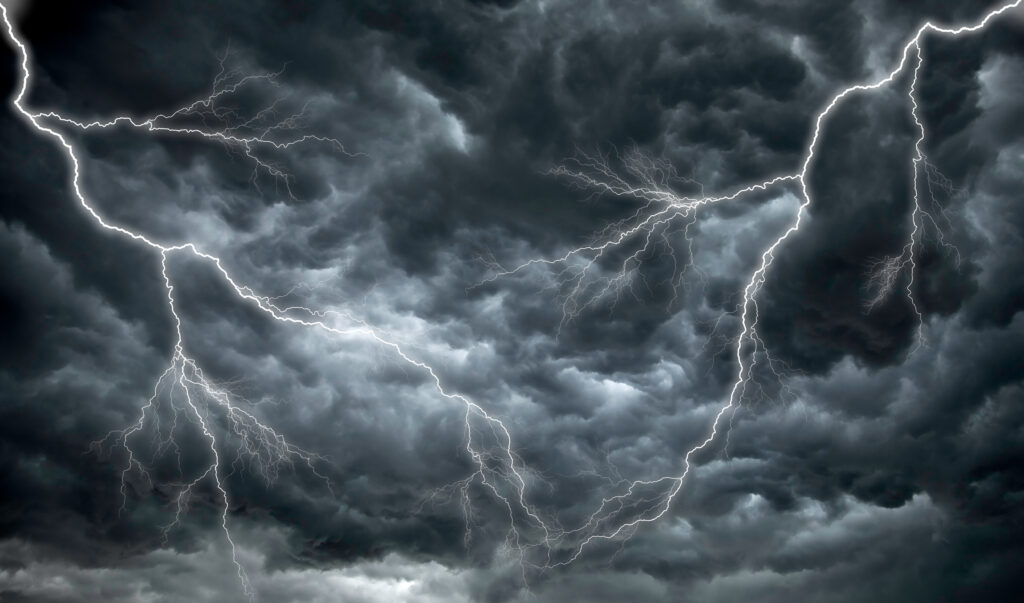
During a single thunderstorm, the same structure can be struck multiple times within minutes or even seconds. When lightning finds a particularly good path to ground, subsequent strikes often follow the same channel. This is why you sometimes see multiple bright flashes in rapid succession hitting the same point.
In fact, some lightning protection systems rely on this principle. Lightning rods are designed to be the most attractive target in an area, intentionally drawing strikes to a safe conductor that channels the electricity into the ground. These rods get struck repeatedly, doing exactly the job they’re designed to do.
What This Means for Your Safety
Never assume a location is safe from lightning just because it was recently struck. If you’re caught outdoors during a thunderstorm, don’t shelter under a tall tree—especially one that shows signs of previous lightning damage like stripped bark or a split trunk. These visible scars prove the tree is a lightning magnet, not that it’s already “taken its turn.”
The safest place during a lightning storm is inside a substantial building with plumbing and electrical wiring, or inside a fully enclosed metal vehicle. Small structures like picnic shelters, tents, and convertible cars don’t provide adequate protection.
If you’re truly caught outside with no safe shelter available, avoid the highest ground, isolated tall objects, and bodies of water. Crouch low with minimal contact with the ground, but don’t lie flat. Stay at least 15 feet away from other people to reduce the risk if someone near you is struck.
Other Lightning Myths Worth Forgetting
While we’re debunking lightning myths, here are a few more dangerous misconceptions to set straight:
Lightning can strike outside of rainfall, sometimes as far as 10 miles from the storm center—hence the term “bolt from the blue.” If you can hear thunder, you’re close enough to be struck, even if it’s not raining on you yet.
Rubber-soled shoes and rubber tires don’t protect you from lightning. Vehicles are safe because of their metal frame, which creates a Faraday cage effect and channels electricity around the outside, not because of the tires.
Being indoors doesn’t mean you can use corded phones, take showers, or lean against plumbing during a storm. Lightning can travel through pipes and wires, so stay away from these conductors until the storm has passed.
Respecting Lightning Means Understanding It
Lightning kills an average of 20 people per year in the United States and injures hundreds more. Many of these tragedies happen because people misunderstand how lightning behaves or believe myths that give them false confidence about their safety.
The truth is simpler and safer than the myths: lightning strikes where physics determines, following the same principles every time. Tall objects, conductive materials, and high points will always be at higher risk—the first time, the second time, and every time after that.
When thunder roars, go indoors. And don’t come back out until 30 minutes after the last rumble. That’s not superstition—that’s science.