Understanding What Differential Snow Melt Reveals About Building Insulation and Energy Waste
Walk through a neighborhood after snowfall and you’ll notice dramatic differences in how snow melts from roofs. Some houses remain covered in white while adjacent homes show bare patches or completely clear roofs. One section of a roof might be clear while another section on the same building stays snow-covered. These patterns aren’t random or due to sun exposure alone—they’re thermal maps revealing where heat is escaping through roofs, making the differential melt rate a visible indicator of insulation quality, air leakage, and energy efficiency. Understanding why snow melts faster on some roofs reveals principles of heat transfer, building science, and why what you see from the street tells you which neighbors are heating the outdoors while you’re all trying to heat your homes.
Heat Escaping Through Roofs Melts Snow
The basic mechanism is straightforward:
Heat from inside the building rises naturally because warm air is less dense than cold air. This heat accumulates in attics and upper floors.
If insulation is inadequate or air leaks allow warm air to reach the roof deck, heat transfers through the roof structure.
The underside of roof sheathing warms from this escaping heat, raising the surface temperature above the outdoor temperature.
Snow on the warm roof section melts even when air temperature remains well below freezing, because the roof surface itself is above 32°F from interior heat loss.
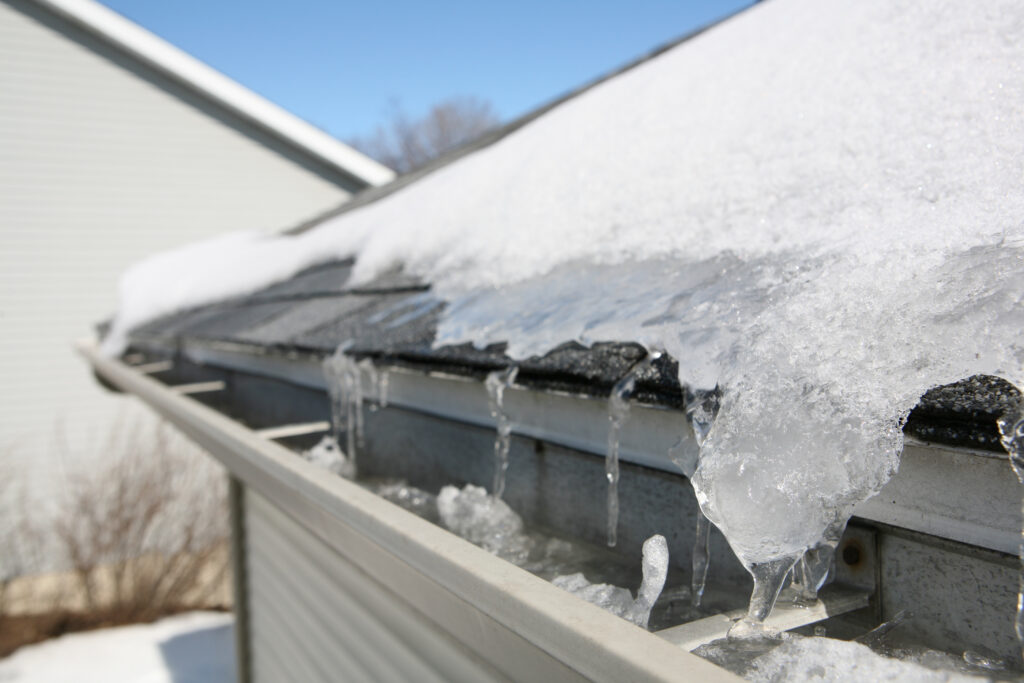
The melt water runs down to colder sections (typically eaves that extend beyond the heated envelope) where it refreezes, often creating ice dams.
The pattern of snow retention therefore maps the insulation quality and air sealing of the building—well-insulated areas retain snow, poorly insulated areas show bare roof.
A snow-covered roof after several days in freezing weather indicates good insulation. A bare roof indicates heat loss.
Why Attics Are Critical
Attic conditions determine most roof snow melt patterns:
Proper attic insulation (R-38 to R-60 in cold climates) prevents heat from reaching the roof deck, keeping the entire roof at outdoor temperature.
Air sealing between living space and attic is actually more important than insulation depth. You can have R-60 insulation, but if warm air leaks around recessed lights, plumbing penetrations, or attic hatches, heat still reaches the roof.
Attic ventilation removes any heat that does reach the attic space, preventing it from warming the roof deck.
The ideal attic is cold—essentially the same temperature as outdoors—and evenly cold across the entire roof area.
Warm spots in the attic translate directly to warm spots on the roof visible as differential snow melt from outside.
Cathedral ceilings without attic space are particularly challenging because there’s limited room for insulation and no attic ventilation to remove heat.
Common Patterns and What They Mean
Specific melt patterns indicate specific problems:
Entire roof bare while neighbors’ roofs have snow: Severe insulation deficiency or major air leakage throughout the attic. This building is wasting enormous amounts of energy.
Bare patches over specific rooms: Those rooms have poor insulation or significant air leakage to the attic. Common problem areas are bathrooms (exhaust fans, plumbing), kitchens (vent hoods, lights), and bonus rooms in attics.
Bare ridge line with snow on rest of roof: Often indicates poorly sealed attic access hatch or pull-down stairs at the ridge, leaking warm air upward.
Valley areas melting first: Can indicate insufficient insulation in valley areas where roof planes meet, or can be solar effect (valleys collect more sun depending on roof orientation).
One side of roof clear, other side snow-covered: Could be sun exposure (south-facing slopes get more solar radiation), but if orientation doesn’t explain it, indicates insulation differences between roof sections—possibly different ages of construction or previous partial renovation.
Bare spots around chimneys, vent pipes, or skylights: Indicates poor sealing and insulation around these penetrations, allowing heat to escape at these specific locations.
Completely snow-covered roof days after storm: Indicates excellent insulation and air sealing. This is the ideal you’re looking for—the roof stays at outdoor temperature because minimal heat escapes.
The Time Factor
How quickly roofs clear indicates heat loss severity:
Roofs clearing within hours of snowfall stopping indicate massive heat loss—the roof is significantly above freezing despite cold outdoor temperatures.
Gradual clearing over days might indicate moderate heat loss combined with solar effects.
Roofs staying snow-covered for weeks until temperatures rise above freezing indicate minimal heat loss—the roof is not being warmed by interior heat.
Comparing neighbors is revealing because they experience the same outdoor conditions (temperature, sun, wind). Differences must come from building performance variations.
New construction should show snow retention if built to modern codes. Bare roofs on new buildings indicate construction defects or code violations.
Solar Effects vs. Heat Loss
Distinguishing sun-caused melting from heat loss melting:
South-facing slopes receive more direct sunlight and naturally warm faster than north-facing slopes during sunny days. This is normal and expected.
East and west slopes experience intermediate solar heating.
North-facing slopes receive minimal direct sun and should stay snow-covered longest.
If south-facing slopes are bare but north-facing slopes retain snow, this might be solar effect. But if it happens on overcast days or within hours of snowfall, it’s heat loss, not sun.
Comparing orientation-matched roofs helps isolate heat loss from solar: if your south-facing slope is bare but your neighbor’s south-facing slope (same orientation, same sun exposure) retains snow, you have heat loss problems they don’t.
Overnight melting definitively indicates heat loss—solar radiation isn’t available, so melting must come from interior heat escaping.
What This Costs You
Heat escaping through roofs costs money and energy:
Every square foot of bare roof in freezing weather represents wasted heat—energy you paid for escaping outdoors instead of warming your living space.
The U.S. Department of Energy estimates that heating costs can be 30-50% higher in poorly insulated homes compared to properly insulated ones.
Beyond heating costs, heat loss creates ice dams that cause roof damage, interior water damage, and expensive repairs.
Summer cooling costs also increase because poorly insulated roofs allow heat into the attic in warm weather, making air conditioning work harder.
Addressing insulation and air sealing typically pays for itself in energy savings within 5-10 years, often faster in severe climates or with high energy prices.
What to Do About Problem Areas
If your roof shows problematic snow melt:
Assess attic insulation depth. In cold climates, you want R-49 to R-60. Measure what you have and add more if inadequate.
More importantly, address air leaks. Seal around recessed lights (use IC-rated fixtures or build covers), seal attic hatches and pull-down stairs, seal around plumbing and electrical penetrations, seal top plates where walls meet the attic floor.
Consider professional energy audit with blower door testing and thermal imaging to identify specific air leakage locations you can’t easily see.
Improve attic ventilation with proper soffit and ridge venting to remove any heat that does reach the attic space.
Cathedral ceiling problems may require professional retrofit—possibly adding exterior insulation or interior spray foam where accessible.
Address the cause, not symptoms. Heating cables for ice dams or mechanical snow removal address consequences of heat loss without fixing the underlying problem.
Commercial and Industrial Buildings
Large buildings show dramatic heat loss patterns:
Flat commercial roofs often show clear patterns of insulated vs. uninsulated bays, with snow melting in grid patterns revealing structure.
Warehouse roofs with inconsistent insulation show patchy melt patterns.
Big-box stores sometimes have completely bare roofs during winter—enormous energy waste creating significant operational costs.
Thermal inefficiency visible from the street costs businesses money and creates environmental impacts through excessive energy consumption.
Using Thermal Imaging
While snow melt patterns are visible to anyone, thermal imaging provides more detail:
Infrared cameras show heat escaping even before snow falls or after snow melts, detecting problems year-round.
Professional audits use thermal imaging to identify specific problem areas.
Snow patterns are free thermal imaging—nature providing visible evidence of what expensive cameras would show, available to anyone who walks through neighborhoods after snowfall.
Persistent bare spots on your roof indicate areas where thermal imaging would show significant heat loss.
New Construction Standards
Modern building codes address heat loss:
Current energy codes require substantial roof insulation and air sealing, theoretically preventing the dramatic heat loss visible on older homes.
Properly built new homes should retain snow coverage on roofs similar to outdoor surfaces, indicating the roof is at outdoor temperature.
If new construction shows bare roofs, it indicates construction quality problems, code violations, or inadequate inspection.
Verifying construction quality through post-occupancy snow melt observation can reveal problems warranty periods can still address.
Environmental Impact
Heat loss visible as snow melt has broader implications:
Every BTU escaping through roofs represents fossil fuel burned (or electricity generated) wastefully.
Residential and commercial buildings account for roughly 40% of U.S. energy consumption. Improving building envelopes significantly impacts national energy use.
The visible waste of bare roofs on cold days represents literally heating the outdoors—the most pointless form of energy consumption.
Addressing building envelope problems is among the most cost-effective climate actions individuals can take.
A Free Energy Audit
After the next significant snowfall, take a walk through your neighborhood and observe roof snow melt patterns. You’re conducting free energy audits of every building you see—nature revealing heat loss that would otherwise be invisible.
Your own roof tells you about your home’s thermal performance. Neighbors’ roofs inform you about typical performance for your housing stock and reveal buildings with excellent or poor energy efficiency.
The fastest-clearing roofs belong to the biggest energy wasters. The longest snow-retaining roofs belong to the best-insulated, best-sealed buildings. And mixed patterns—some areas clear, others snow-covered—reveal specific problem zones where targeted improvements would yield benefits.
Understanding that differential snow melt isn’t about roof color, construction materials, or architectural features but primarily about heat escaping from below transforms a winter scene into an information-rich display about building performance, energy waste, and the invisible movement of heat from warm interiors through inadequate insulation into cold outdoor air where it accomplishes nothing except melting snow and costing money.
Next time you see bare roofs on a freezing day, recognize you’re seeing wasted energy made visible—heat that someone paid to generate, paid to deliver, and paid to waste into the atmosphere because their building envelope allows it to escape rather than accomplishing its intended purpose of keeping indoor spaces comfortable. The snow is simply making the usually-invisible heat loss visible, painting a thermal map across the neighborhood one melting patch at a time.