Understanding How Depth Changes Snow Color from White to Deep Blue
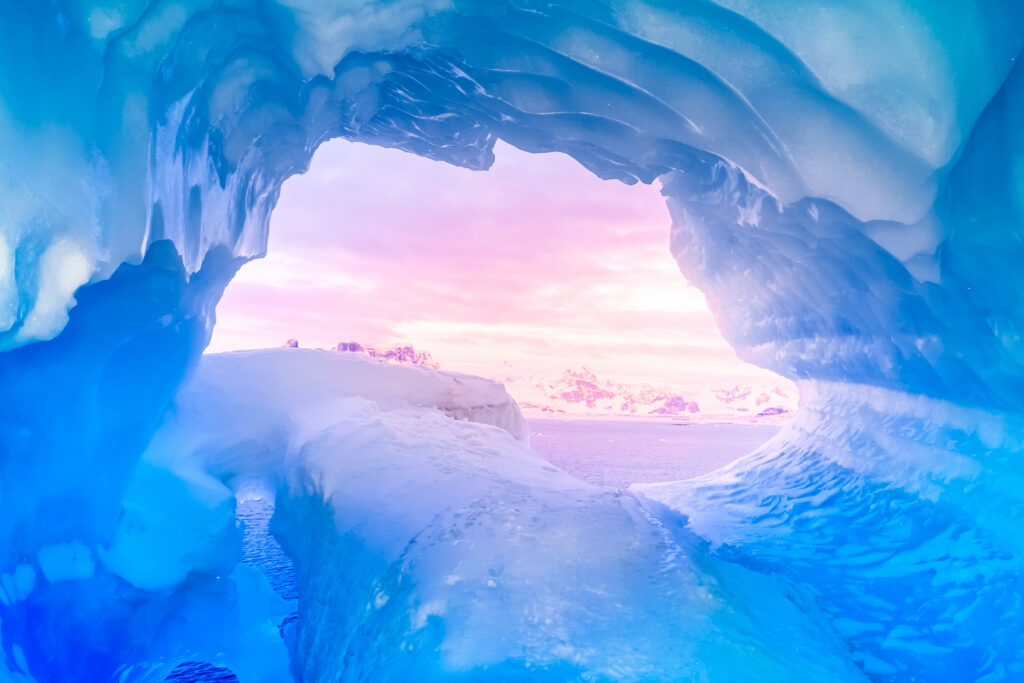
Dig deep into a snowbank, peer into a crevasse on a glacier, or look closely at a deep snow cave, and you’ll notice something unexpected: instead of white, the snow appears blue—sometimes a pale sky blue, other times a deep, rich azure that seems impossibly vibrant. This color shift isn’t an optical illusion or a reflection of the sky. Deep snow genuinely is blue, and the color intensifies with depth. Understanding why snow transitions from white at the surface to brilliant blue in cavities reveals fundamental physics about how light interacts with ice, how different wavelengths are absorbed at different rates, and why the same material can appear different colors depending on depth and structure.
Fresh Surface Snow Is White
At the surface, snow appears white for straightforward reasons:
Snow consists of ice crystals with intricate, irregular shapes that create complex surfaces with countless facets and air gaps.
Light entering snow reflects and refracts in random directions off these irregular surfaces—scattering occurs in all directions roughly equally for all visible wavelengths.
All colors scatter equally from fresh snow’s complex structure, so the light that exits back to your eyes contains all wavelengths in roughly equal proportions—which your brain interprets as white.
Air gaps between crystals enhance this scattering, ensuring that light doesn’t penetrate deeply before being scattered back out.
This is why fresh snow is bright white—efficient, non-selective scattering of all colors from the chaotic structure of snow crystals.
But this changes dramatically when light penetrates deep into snow or solid ice where less scattering occurs and where absorption begins to dominate over reflection.
Ice Preferentially Absorbs Red Light
Pure ice—whether in solid blocks or compressed snow—has subtle but important absorption properties:
Ice absorbs red light more strongly than blue light. The molecular structure of ice causes it to absorb photons in the red and infrared part of the spectrum more readily than blue or violet photons.
The absorption is weak but cumulative. Ice is relatively transparent, so you don’t notice the effect over small distances. But as light travels through more ice, the cumulative absorption becomes visible.
Red wavelengths are gradually removed as light passes through ice, while blue wavelengths pass through more efficiently.
The result: Light that’s traveled through significant ice depth has lost more red than blue, shifting the color balance toward blue.
This is the same reason glacial ice appears blue, lakes look blue when deep, and ice cubes sometimes have a blue tint at their centers—selective absorption of red wavelengths over distance.
Depth Allows Absorption to Dominate Scattering
The transition from white surface snow to blue deep snow happens because depth changes which process dominates:
At the surface, light encounters the first few millimeters or centimeters of snow, scatters randomly off countless crystal surfaces, and exits before traveling far—scattering dominates, producing white appearance.
In deep cavities, light enters the snow, may scatter multiple times but generally penetrates deeper into the snowpack because it’s entering from the side or from darkness where there’s no competing surface reflection.
The light travels through meters of compressed snow or solid ice before scattering back to your eyes. During this journey, red wavelengths are progressively absorbed.
By the time light exits, it’s predominantly blue because red has been removed by absorption during the extended path through ice.
The deeper the cavity, the more ice the light must traverse, and the more intensely blue it appears. Shallow depressions show pale blue; deep crevasses show rich, saturated blue.
Why Compressed Snow Shows More Blue
Snow compression affects how much blue appears:
Fresh, fluffy snow with lots of air gaps scatters light at the surface before it can penetrate deeply, maintaining white appearance even in somewhat deep piles.
Compressed or aged snow (firn, névé) has less air, allowing light to penetrate further before being scattered back. This increased path length enhances red absorption and blue appearance.
Solid glacial ice has minimal air gaps and behaves like pure ice—light travels long distances through the material before scattering or exiting, making blue color most intense.
This explains why old snow in deep snowpacks and glaciers shows blue color more readily than fresh powder—compression reduces scattering at the surface, allowing light to penetrate deep enough for selective absorption to become visible.
Glacier Crevasses: Ultimate Blue
Glacier crevasses display the most dramatic blue snow/ice:
Deep, narrow crevasses can be 50-100+ feet deep with vertical ice walls. Light entering the crevasse must travel through tremendous amounts of ice before exiting.
The extreme path length removes essentially all red light, leaving only deep blue wavelengths.
The vertical walls and shadowed interior prevent direct sunlight from washing out the color, allowing the pure blue of the ice itself to dominate.
Some crevasses appear almost electric blue or cyan—intensely saturated colors that seem impossible for natural ice.
The color is real ice color, not reflection or illusion—it’s what ice looks like when you remove red wavelengths through absorption over long distances.
Snow Caves and Igloos
Built snow shelters sometimes show subtle blue tints:
Thick snow walls of igloos or snow caves allow some light to filter through, traveling through feet of compressed snow before reaching the interior.
The transmitted light appears blue because red wavelengths are absorbed during passage through the snow.
The effect is subtle in typical shelters because walls might only be 1-2 feet thick—enough for slight blue tint but not the dramatic blue of much thicker ice.
Lighting conditions matter. Strong exterior sun highlights the blue tint more obviously than overcast conditions.
Inuit builders of traditional igloos were certainly aware of this phenomenon, experiencing the subtle blue-white light filtering through snow walls.
Why the Sky Isn’t Involved
A common misconception is that blue snow reflects the blue sky:
The blue color persists even on overcast days when the sky is gray, proving it’s not a reflection of sky color.
Shaded crevasses with no view of the sky still appear blue—the color comes from the ice itself, not from reflected skylight.
The physics is absorption, not reflection. If blue snow were reflecting the blue sky, you’d also see white snow reflecting white clouds and gray snow reflecting gray skies—but snow stays white or blue regardless of sky conditions.
This is the same reason deep ocean water is blue—not because it reflects the sky (it doesn’t) but because water, like ice, preferentially absorbs red light and transmits blue over depth.
Temperature and Purity Don’t Affect the Blue
Some factors don’t significantly change the blue color:
Temperature doesn’t affect ice’s absorption properties noticeably. Cold ice and warm ice both appear blue when deep or compressed.
Purity matters only if contaminants are present. Pure snow and ice are blue; dirty snow might be brown or gray; but pure snow at different temperatures still shows the same blue.
Crystal structure affects scattering (how white surface snow appears) but doesn’t change ice’s fundamental absorption properties that create blue color at depth.
The molecular structure of ice is what determines absorption characteristics, and this is consistent across temperature and structure variations.
Other Materials Show Similar Effects
Ice isn’t unique in this behavior:
Water is famously blue in great depth for the same reason—preferential red absorption. Deep oceans, deep lakes, and thick aquariums all show blue coloration.
The principle is universal: Many substances appear colorless in small amounts but show color in great depth because they absorb some wavelengths more than others.
Quartz and glass can show subtle colors in thick sections for the same reason.
What makes ice special is that it’s common, easy to observe, and creates dramatic enough color that people notice and wonder about it.
Observing Blue Snow Yourself
To see blue snow:
Look into deep snowbanks where plows have cut vertical faces, especially if the snow is old and compressed.
Examine deep post holes or test pits in snowpack, looking at the walls from the side where light must travel through snow to reach your eyes.
Visit glaciers with accessible crevasses or ice caves (safely, with proper guidance). The blue is unmistakable.
Create your own observation by digging a deep pit in old snow and looking at the walls as light filters through from the sides.
Compare surface snow (white) with the same snow viewed through depth (blue) to see the transition clearly.
Photography sometimes captures the blue more vividly than casual observation, especially with exposure settings that don’t overpower the subtle color.
The Science Made Visible
Blue snow in deep cavities and crevasses demonstrates visible-wavelength absorption spectroscopy happening naturally before your eyes. The same physics labs use to identify materials by how they absorb different wavelengths is occurring in snowbanks and glaciers, with ice molecules preferentially absorbing red photons and transmitting blue ones.
Each photon’s journey through the ice is a probability game—red photons have higher chances of being absorbed at each molecule they encounter, while blue photons pass through more freely. Over centimeters, the effect is negligible. Over meters, it becomes noticeable. Over tens of meters in glacier ice, it becomes dramatic—deep, saturated blue that reveals ice’s true color when you can see it in quantity without the masking effect of surface scattering.
From White to Blue
The transformation from white surface snow to blue deep snow represents a shift from scattering-dominated optics to absorption-dominated optics. Surface snow scatters all wavelengths equally before they can be absorbed, appearing white. Deep snow or ice allows light to travel far enough that absorption—specifically, the preferential absorption of red wavelengths—becomes the dominant effect, shifting the color balance to blue.
Next time you see dramatically blue ice in a crevasse photograph or notice a faint blue tint in a deep snowbank, you’re witnessing the molecular properties of ice made visible through depth. The color isn’t painted on, reflected, or imagined—it’s the intrinsic color of ice when you look through enough of it that red wavelengths have been selectively removed, leaving behind the blue that was always there but only becomes visible when depth and compression allow light to travel far enough for absorption physics to overwhelm the scattering that makes surface snow white. It’s the color of winter itself, hidden in plain sight until depth reveals what ice truly looks like without red.