Understanding the Conditions That Create Winter’s Intricate Frozen Designs
Walk outside on a frigid winter morning and you might find your car windshield, outdoor furniture, or metal surfaces decorated with elaborate frost patterns—feathery ferns, delicate flowers, geometric swirls, or intricate crystalline landscapes. These aren’t random ice formations but structured patterns that emerge from the physics of water vapor deposition and ice crystal growth. Understanding why frost forms patterns—and why certain conditions produce more elaborate designs than others—reveals the interplay between temperature, humidity, surface characteristics, and the fundamental properties of ice crystals.
Frost Forms Directly from Water Vapor
Unlike freezing rain or snow that start as liquid water, frost forms through deposition—water vapor in the air transforming directly into solid ice without becoming liquid first:
Water vapor always exists in air to some degree, even in winter. The amount depends on temperature and humidity.
When surfaces cool below the frost point—the temperature at which air becomes saturated with respect to ice—water vapor deposits directly onto the cold surface as ice crystals.
The frost point is slightly higher than the dew point because water vapor more readily condenses onto ice than onto liquid water at the same temperature. This means frost can form at temperatures just below 32°F when dew wouldn’t form until colder temperatures.
Deposition allows frost to form even when the air itself isn’t saturated—as long as the surface is cold enough and sufficient water vapor exists nearby, frost can develop.
This process differs fundamentally from frozen dew (dew that forms as liquid then freezes), though the two are often confused. True frost never passes through a liquid phase.
Why Frost Forms Patterns Instead of Uniform Coating
Random ice deposition would create a uniform white coating. Patterns emerge because of how ice crystals grow:
Ice has hexagonal crystal structure dictated by the geometry of water molecules. When ice crystals form and grow, they naturally develop six-fold symmetry—the same reason snowflakes are six-sided.
Initial nucleation sites are random—dust particles, scratches, or irregularities on the surface. At these points, first ice crystals form.
Crystal growth preferentially occurs at the edges and corners of existing crystals rather than on flat faces. This is because water molecules can bond more easily at edges where they can attach to multiple existing molecules.
Branching creates patterns. As crystals grow from nucleation sites, branches extend outward, preferentially along certain crystal axes determined by ice’s hexagonal structure. Secondary branches form on primary branches, creating increasingly complex patterns.
Competition between crystals occurs as multiple nucleation sites generate growing patterns. Where patterns meet, growth slows or stops, creating boundaries and making the pattern more visible.
Temperature and humidity gradients across the surface—some areas slightly colder or exposed to more moisture than others—create variations in growth rate that enhance pattern visibility.
The Classic Fern Frost Pattern
The most recognizable frost pattern resembles delicate ferns:
Fern frost develops when conditions favor rapid crystal growth with extensive branching. A primary stem extends from a nucleation point, with secondary branches growing at angles from the main stem, and tertiary branches from those, creating fern-like fronds.
This pattern reflects the dendritic growth of ice crystals—tree-like branching that occurs when crystal tips grow faster than sides.
Optimal conditions for fern frost include surfaces significantly below freezing (creating fast growth) and adequate humidity (providing moisture for extensive branching).
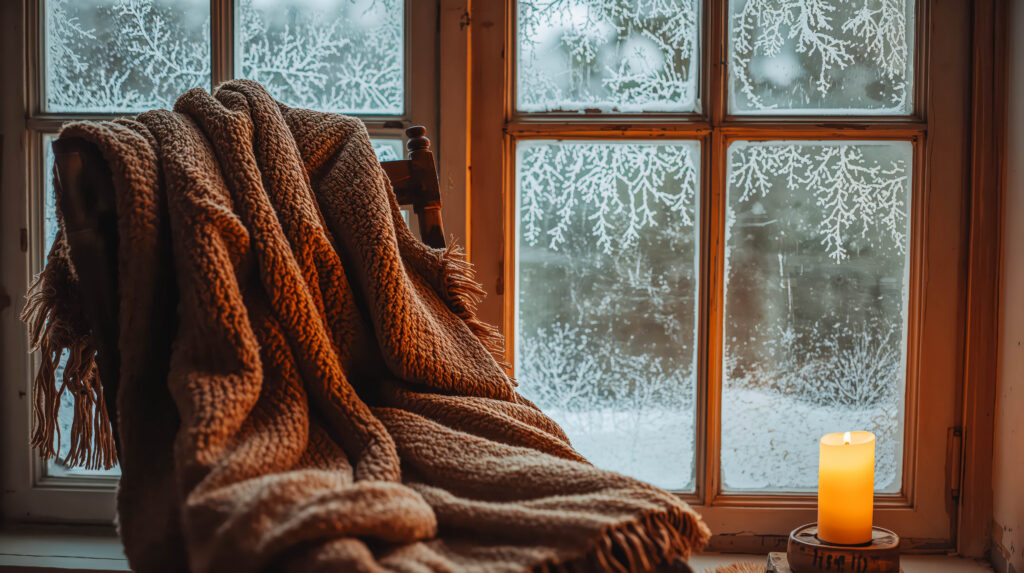
Window frost particularly favors fern patterns because glass surfaces can become very cold while indoor moisture provides abundant water vapor for crystal growth.
Other Frost Pattern Types
Different conditions produce distinct pattern types:
Needle frost forms as long, thin ice needles extending perpendicular from surfaces, common on wood, cloth, and vegetation. This develops when conditions favor vertical growth over branching.
Plate frost creates overlapping hexagonal or circular plates, resembling coins or scales. This occurs with slower growth rates and specific temperature ranges.
Polycrystalline frost produces a uniform, sugary coating without obvious patterns—the type most common on metal surfaces and cold mornings without special conditions for pattern development.
Hoar frost on trees and vegetation creates delicate ice structures extending from branches and leaves, formed when fog or very humid air freezes onto cold surfaces, building three-dimensional crystalline structures.
Window frost is particularly prone to elaborate patterns because glass provides a smooth surface, buildings maintain temperature gradients, and indoor humidity supplies moisture.
Temperature’s Role in Pattern Formation
Temperature affects both whether frost forms and what patterns emerge:
Severely cold surfaces (well below freezing) promote rapid frost formation and extensive branching because the temperature difference between air and surface drives fast crystal growth.
Surfaces just below 32°F form frost slowly, often with simpler patterns or no obvious patterns—just uniform coating.
Very cold conditions (air temperature well below 0°F) might actually reduce pattern complexity if humidity is very low, limiting moisture availability for crystal growth.
Temperature gradients across a surface—some areas colder than others—create zones of faster and slower growth, enhancing pattern contrast.
The sweet spot for elaborate frost patterns typically involves surfaces at 20-28°F with moderate humidity and calm conditions that allow slow, steady crystal growth throughout the night.
Humidity’s Critical Importance
Water vapor availability determines whether frost forms and how extensively:
High humidity provides abundant moisture for crystal growth, enabling elaborate, extensive patterns.
Low humidity limits frost formation. Even with cold surfaces, insufficient water vapor means minimal or no frost develops.
Fog or mist provides exceptional moisture availability, creating the most dramatic frost formations—thick accumulations of hoar frost coating every surface.
Indoor humidity in buildings contributes to window frost. Moisture from cooking, breathing, showering, and humidifiers increases interior water vapor that migrates to cold window surfaces.
Calm air allows moisture to deposit steadily onto growing frost crystals. Wind disperses water vapor and can actually reduce frost formation despite providing cold temperatures.
Surface Properties Influence Patterns
The material and condition of the surface affects frost formation:
Smooth surfaces like glass allow the most visible, organized patterns because crystal growth isn’t disrupted by surface irregularities.
Rough surfaces produce less organized patterns as numerous small irregularities create many competing nucleation sites.
Metal surfaces conduct heat well and cool uniformly, often producing polycrystalline frost without elaborate patterns unless conditions are optimal.
Wood, plastic, and vegetation have insulating properties that create temperature variations, sometimes enhancing pattern formation.
Clean surfaces allow clearer patterns than dirty or oily surfaces where contaminants interfere with crystal growth.
Pre-existing frost or ice from previous nights creates modified patterns as new frost deposits onto existing structures.
Why Car Windshields Get Such Elaborate Frost
Car windows particularly favor frost formation and pattern development:
Glass cools rapidly on clear nights through radiational cooling, often becoming colder than surrounding air.
Interior humidity from breathing and residual moisture creates a water vapor source on the inside of windows.
Large, smooth surfaces provide ideal conditions for visible pattern formation.
Overnight parking gives frost many hours to develop undisturbed.
Heat loss through glass combines with cold exterior air to create the temperature conditions ideal for frost formation.
This explains why car windshields often need scraping even on mornings when frost is minimal elsewhere—conditions are perfect for frost formation on auto glass.
Time-Lapse of Frost Growth
Frost patterns develop gradually over hours:
Initial nucleation creates scattered ice crystal seeds, often invisible to casual observation.
Primary growth extends stems or branches from nucleation sites, establishing the basic pattern structure.
Secondary branching adds complexity as crystals elaborate their structures.
Pattern completion occurs over several hours, with the most intricate designs developing after 6-8 hours of undisturbed growth in stable conditions.
Morning observation shows completed patterns, but they developed incrementally throughout the night as temperature dropped and humidity deposited.
Time-lapse photography of frost formation reveals how patterns grow from nothing to elaborate designs, with growth accelerating when conditions are optimal and slowing when moisture or temperature conditions become less favorable.
Historical Window Frost
Before modern double-pane windows and central heating, window frost was far more common:
Single-pane windows cooled much more than modern insulated windows, reaching temperatures well below freezing indoors when outdoor air was very cold.
Less humidity control in older homes meant variable moisture levels, often sufficient for frost formation.
Poor heating allowed indoor surfaces to cool significantly overnight.
Historical accounts frequently mention waking to frost-covered windows with elaborate patterns—a common winter experience now rare in modern, well-insulated homes.
Victorian fascination with frost patterns appears in art, literature, and photography from eras when window frost was a regular winter occurrence.
Modern energy-efficient windows rarely get cold enough on interior surfaces for frost formation, making the phenomenon less familiar to younger generations.
Preventing vs. Appreciating Frost
While frost patterns are beautiful, they sometimes pose problems:
Car windshield frost delays morning travel, requiring scraping or defrosting.
Interior window frost indicates insulation problems and excessive indoor humidity.
Frost on sensitive equipment can cause damage or malfunction.
Prevention strategies include reducing indoor humidity, improving insulation, using garage parking for vehicles, or applying anti-frost treatments to glass.
Yet there’s aesthetic value in frost’s temporary artwork—patterns that exist for hours before morning sun melts them away, never to be exactly replicated.
Nature’s Temporary Gallery
Frost patterns represent the intersection of physics, chemistry, and mathematics—water molecules following crystal structure rules, ice growing according to thermodynamic principles, and branching fractals emerging from simple growth algorithms executed at molecular scale.
Each frost pattern is unique because exact temperature distributions, humidity levels, surface conditions, and nucleation site positions never repeat identically. Yet all patterns follow the same rules, producing endless variations on themes of hexagonal symmetry, dendritic branching, and crystalline growth.
Next time you find frost coating your windshield or decorating outdoor surfaces, take a moment to examine the patterns before scraping them away. You’re observing water vapor molecules transformed into ice crystals, growing outward from random starting points according to the fundamental geometry of ice, creating elaborate designs through nothing more than temperature, humidity, and time. It’s nature’s daily artwork—temporary, intricate, and free—requiring only cold surfaces, moisture in the air, and the patience to let crystal growth proceed undisturbed through the quiet hours of a winter night.