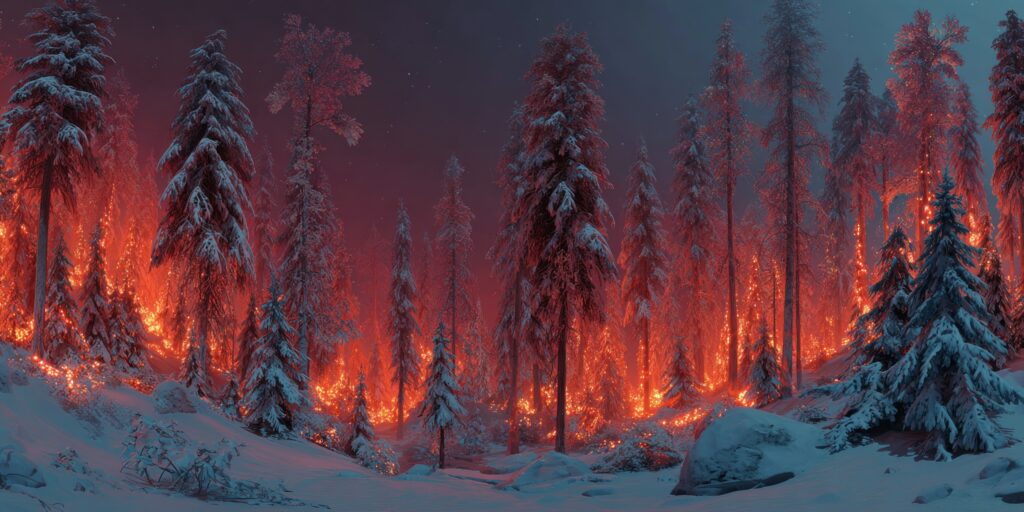
The Hidden Danger of Fires in Cold, Dry Conditions
When you think of wildfire season, summer likely comes to mind—hot, dry weather with lightning strikes igniting parched forests. But winter wildfires are becoming an increasingly serious threat in many regions. While snow and cold might seem incompatible with fire danger, certain winter conditions can create perfect circumstances for devastating wildfires that catch communities off guard.
Dry Winter Conditions Set the Stage
Winter wildfires typically occur when an area experiences extended dry periods without significant precipitation. In parts of the West, Southwest, and Great Plains, winter can be the driest season of the year, with months passing between meaningful rainfall or snowfall.
When vegetation dries out during these periods, it becomes highly flammable fuel. Dead grasses, fallen leaves, and dormant brush contain very little moisture and ignite easily. Unlike green summer vegetation that retains some water content, winter fuels are often bone-dry and ready to burn.
Low humidity compounds the problem. Winter air in many regions holds very little moisture, especially during high-pressure systems that bring clear skies and calm conditions. Relative humidity can drop to 10-20% or even lower, creating conditions where fires spread rapidly once started.
Strong Winds Drive Winter Fire Behavior
Some of the strongest wind events occur during winter months. Chinook winds in the Rockies, Santa Ana winds in Southern California, and similar downslope wind patterns across the West can reach 40-60 mph or higher.
These winds don’t just spread fires—they create extreme fire behavior. Strong winds push flames horizontally, allowing fires to jump roads, rivers, and firebreaks. Embers carried by wind can travel miles ahead of the main fire, starting spot fires that quickly merge into massive conflagrations.
Wind-driven winter fires move at frightening speeds. The Marshall Fire in Colorado (December 2021) destroyed over 1,000 structures in a matter of hours, driven by winds exceeding 100 mph. Residents had minutes—not hours—to evacuate.
Snow Cover Isn’t Always Protective
Even in areas that typically see winter snow, conditions can align to create fire risk. A winter with below-average snowfall leaves vegetation exposed and vulnerable. Warm, dry periods between storms can dry out fuels quickly, especially with winter’s low sun angle and strong winds.
In mountainous regions, south-facing slopes often remain snow-free even when north-facing slopes are buried. These exposed areas can burn while surrounding landscapes remain covered in snow, creating surreal scenes of fire and ice coexisting within miles of each other.
Early season snowfall that later melts can actually increase fire danger by promoting vegetation growth that then dries out if winter precipitation fails to continue.
Human Activity Increases Ignition Risk
Winter wildfires are overwhelmingly human-caused rather than lightning-ignited. Equipment use, power lines damaged by wind, vehicle fires, escaped debris burns, and discarded cigarettes all pose ignition risks.
The Marshall Fire was likely sparked by power lines. The Camp Fire in California (November 2018), the deadliest in state history, ignited from power equipment. Winter wind events stress electrical infrastructure, creating sparks that can instantly ignite dry vegetation.
People don’t expect fire danger in winter and may take risks they’d avoid in summer fire season—burning yard waste on windy days, parking vehicles with hot exhaust systems in dry grass, or leaving outdoor fires unattended.
Urban-Wildland Interface Is Most Vulnerable
Winter wildfires pose particular danger to communities in the wildland-urban interface—areas where homes mix with natural vegetation. These neighborhoods exist throughout the West, Southwest, Great Plains, and increasingly in other regions.
When fast-moving winter fires reach these communities, the results can be catastrophic. The combination of extreme winds, dry conditions, and proximity to structures means fires can sweep through neighborhoods before adequate firefighting response is possible.
Unlike summer fires that often develop more gradually, wind-driven winter fires can explode from a small ignition to a major conflagration in minutes, reaching populated areas before warnings can even be issued.
Fire Season Is Now Year-Round in Many Areas
Climate patterns are shifting traditional fire seasons. Areas that historically saw minimal winter fire risk now face elevated danger during dry winter periods. The concept of a defined “fire season” is becoming obsolete in some regions where fire danger exists year-round.
Longer droughts, reduced snowpack, earlier spring warming, and more frequent extreme wind events all contribute to expanded fire risk windows. Communities that never worried about winter fires now need year-round preparedness plans.
Protecting Your Home in Winter
If you live in a fire-prone area, winter fire preparation is essential:
Maintain defensible space year-round. Don’t let dry leaves, dead vegetation, or combustible materials accumulate near your home just because it’s winter.
Clear gutters and roofs. Dead leaves and pine needles make excellent kindling for embers that land on your roof.
Pay attention to Red Flag Warnings. These warnings for extreme fire danger are issued year-round when conditions support rapid fire spread.
Have an evacuation plan ready always. Don’t assume winter means you’re safe. Know your evacuation routes and keep emergency supplies ready.
Avoid outdoor burning on windy days. Even legal burning activities become extremely dangerous when winds are strong and humidity is low.
Report downed power lines immediately. Don’t assume someone else will call—damaged power equipment is a major winter fire ignition source.
Early Detection and Response Are Critical
Winter fires often catch firefighting resources unprepared. Equipment may be in maintenance status, seasonal firefighters may have been released, and aircraft may not be immediately available. This makes early detection and rapid initial response even more crucial.
Many wildfire agencies now maintain year-round staffing and readiness specifically because of increasing winter fire risk. But resources are finite, and a major fire event can quickly overwhelm available crews.
The New Reality of Winter Fire
The idea that winter means safety from wildfire is dangerously outdated in many parts of the country. As climate patterns shift and development pushes further into fire-prone landscapes, winter fire risk is a reality that communities and individuals must prepare for.
Snow on the ground doesn’t guarantee safety. Dry conditions, strong winds, and human activity can create fire danger any month of the year. Understanding that fire season never truly ends is the first step toward staying safe when winter fires threaten.
If you live in a fire-prone region, treat every dry, windy day as a potential fire risk regardless of the calendar date. The next catastrophic wildfire might not wait for summer.